
Tech
Contract Lifecycle Management: Complete Guide (2026)


I have managed contracts for mid-market and enterprise teams for over six years. I have tested spreadsheets, shared drives, and a dozen dedicated platforms. The difference between doing it right and doing it wrong costs companies real money sometimes millions.
This guide covers everything I have learned about contract lifecycle management. I will walk you through the stages, the tools, the integrations, and the honest tradeoffs. No fluff. No generic advice. Just what actually works.
Table of Contents
- What Is Contract Lifecycle Management (CLM)?
- My Honest First Impressions of CLM Platforms
- Key Features of a Strong CLM System
- How To Get Started with Contract Lifecycle Management Step by Step
- Best Contract Lifecycle Management Software Available in 2025
- How Contract Lifecycle Management Works (Full Process Breakdown)
- Community and Ecosystem Around CLM Tools
- Full Features and Benefits Table
- Pros and Cons of CLM Software
- Safety and Trust in Contract Management
- CLM Software Comparison Table
- Tips and Tricks for Better Contract Management
- Who Is CLM Best For?
- External Resources
- FAQs
- Final Verdict
- What Is Contract Lifecycle Management (CLM)?
- Contract lifecycle management is the automated, end-to-end process of managing a contract from its initial creation through execution, performance monitoring, and eventual renewal or termination.
- Think of it as a structured system that tracks every stage of a contract’s life. It removes the guesswork. It replaces scattered email chains and desktop folders with a single, searchable, automated workflow.
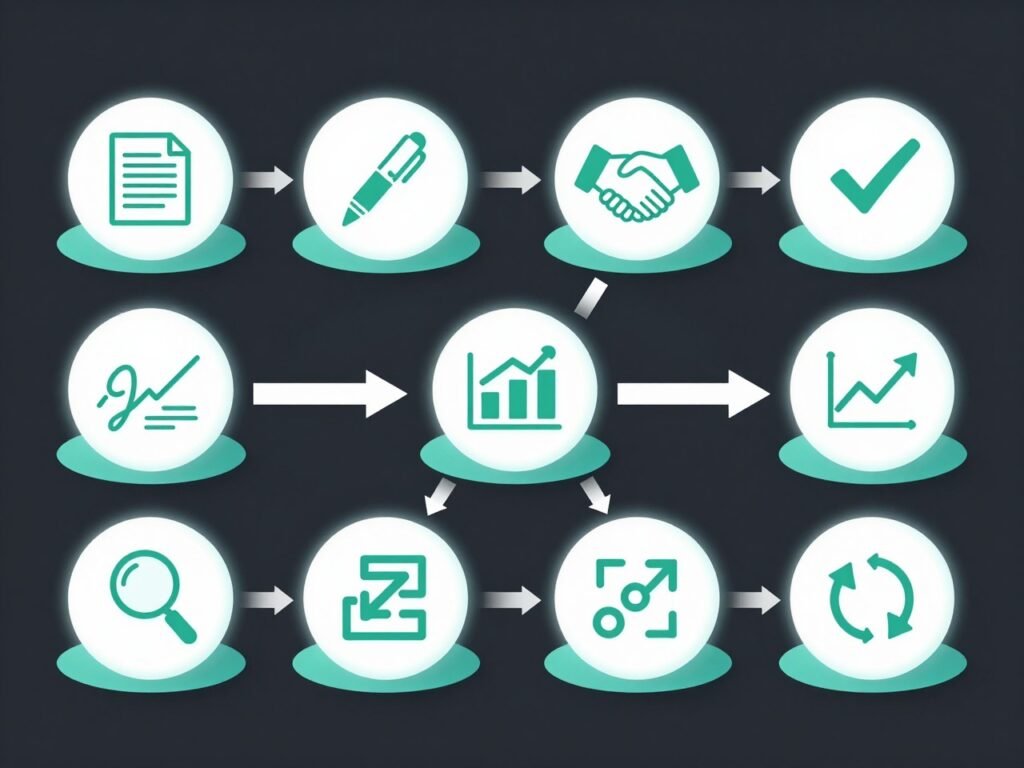
- A proper CLM system covers nine core stages:
- Request — A team submits a contract need with key details
- Authoring — Legal or sales drafts the contract using pre-approved templates
- Negotiation — Both sides review, redline, and counter-offer
- Approval — The contract routes automatically to stakeholders for sign-off
- Execution — All parties sign, usually via e-signature tools like DocuSign
- Performance and Compliance — Teams track deliverables and obligations post-signature
- Auditing and Reporting — Regular checks confirm all terms are being honored
- Amendments — Changes to scope or terms are tracked and appended
- Renewal or Termination — The contract is renewed, renegotiated, or closed out
- Without this process in place, companies suffer from what I call “contract blindspots.” Renewals get missed. Discount terms go unenforced. Legal language goes stale. Revenue leaks out through gaps nobody noticed.
- My Honest First Impressions of CLM Platforms
- When I first started evaluating contract lifecycle management platforms, I expected them all to feel basically the same. They did not.
- Some tools — like Icertis and SirionLabs — are genuinely built for enterprise complexity. They handle multi-entity, multi-jurisdiction contracts with advanced AI extraction. Impressive, but overkill if you are a 50-person company.
- Others, like SpotDraft and Juro, felt lighter and faster. Easier to deploy. Better for teams that need quick wins rather than six-month implementations.
- What surprised me most was how much the integrations mattered. A CLM tool that sits isolated from your CRM or ERP is just a fancy document folder. The moment it syncs with Salesforce, ServiceNow, or Workday, it becomes a revenue and compliance engine.
- I spent time on each platform’s free tier or trial where available. I ran mock contract workflows, tested approval routing, and pushed the search functionality hard. Here is what I found.
- Key Features of a Strong Contract Lifecycle Management System
- Centralized Contract Repository
- Every contract, every version, every redline — stored in one searchable place. No more hunting through email or shared drives. A central repository gives your legal, finance, and procurement teams a single source of truth.
- Pre-Approved Template and Clause Libraries
- Strong CLM platforms come with clause libraries built in. Your legal team pre-approves standard language. Everyone else pulls from that library instead of writing from scratch. This cuts drafting time significantly and reduces legal risk.
- Automated Approval Workflows
- Manual routing kills deal speed. The best contract lifecycle management tools automatically route documents to the right people in the right order. If someone is out of office, it escalates. Nothing sits in an inbox for three days.
- E-Signature Integration
- Execution should not require printing, scanning, or faxing. Native integrations with DocuSign CLM or Adobe Sign let contracts move from approved to signed in minutes. This alone speeds up your revenue cycle noticeably.
- AI-Assisted Contract Review and Extraction
- Newer platforms use AI to scan contracts and flag non-standard clauses, missing terms, or compliance risks. I tested this on legacy vendor agreements and it caught three high-risk clauses my team had missed manually. That is the kind of ROI that justifies a platform budget.
- Obligation and Milestone Tracking
- Post-signature is where most teams fall apart. CLM software tracks deliverables, payment schedules, SLAs, and renewal dates automatically. Alerts go out 30, 60, or 90 days before key dates. You never miss a deadline again.
- Reporting and Analytics
- Good platforms give you dashboards showing contract velocity, approval bottlenecks, and compliance scores. I used this data to identify that one specific legal reviewer was adding an average of 8 days to every contract. We fixed the process. Cycle time dropped immediately.
- How To Get Started with Contract Lifecycle Management Step by Step
- 1. Getting a CLM system off the ground does not have to take months. Here is the process I recommend based on what I have seen work.
- 2. Audit your current contract inventory – Count how many active contracts you hold. Categorize them by type: vendor, customer, employment, partnership.
- 3. Identify your biggest pain points — Are renewals getting missed? Are approvals taking too long? Are templates inconsistent? Your worst problem determines which CLM feature matters most.
- 4. Choose the right tier of tool — Enterprise teams with 500+ contracts need Icertis or Ironclad. Smaller teams can start with SpotDraft or Juro without overbuilding.
- 5. Map your approval workflow — Before you configure anything, document who approves what and in what order. Build that into the platform from day one.
- 6. Import your existing contract library — Upload and tag your existing contracts with metadata: counterparty name, value, expiry date, contract type.
- 7. Build your clause and template library — Work with legal to pre-approve your standard templates. Store them in the platform. Enforce their use from the first new contract.
- 8. Run a pilot with one contract type — Start with one contract category, like vendor NDAs or standard sales agreements. Work out the kinks before rolling out company-wide.
- 9. Set automated alerts for key dates — Configure renewal and expiry notifications at 90, 60, and 30 days out. This step alone pays for the tool.
- 10. Train your teams — CLM adoption fails when people are not trained. Do live walkthroughs. Create short reference guides for each team that touches contracts.
- 11. Measure and iterate — After 90 days, pull your reporting data. Look at cycle time, approval speed, and compliance rates. Adjust the workflow based on what the data shows.
- Best Contract Lifecycle Management Software Available in 2025
- Here are the platforms I have evaluated and what each one does best.
- Icertis — The enterprise standard. Deep AI capabilities, strong compliance features, and complex workflow support. Best for large organizations managing thousands of contracts across multiple entities.
- Ironclad — Excellent for legal operations teams. Clean UI, strong collaboration tools, and a solid audit trail. Popular with tech companies and fast-growing startups.
- DocuSign CLM — If your organization already uses DocuSign for signatures, this is the natural CLM extension. Strong e-signature integration, solid repository, good for mid-market teams.
- Salesforce Contract Lifecycle Management — Built inside Salesforce Revenue Cloud. If your sales team lives in Salesforce, this keeps contracts inside the same system where deals are managed. No context switching.
- ServiceNow Contract Lifecycle Management — Strong for IT and operations-heavy organizations already on the ServiceNow platform. Excellent for procurement and legal service delivery workflows.
- Workday Contract Management — Deep integration with Workday’s HR and finance modules. Best for companies that manage employment contracts or vendor agreements tied to finance operations.
- SpotDraft — AI-native contract platform. Fast to deploy, intuitive for non-legal users, and surprisingly powerful for its price point. Strong choice for startups and growth-stage companies.
- Juro — Browser-native CLM built for collaborative contract editing. Strong for teams that negotiate heavily and want real-time collaboration without email attachments.
- Conga — Formerly Apttus. Strong CPQ and document generation capabilities. Works well alongside Salesforce for quote-to-contract workflows.
- Agiloft — Highly configurable, no-code platform. Good for organizations with unique workflow requirements that out-of-the-box tools cannot handle.
- How Contract Lifecycle Management Works in Practice
- Let me walk you through a real-world CLM workflow using a sales contract as the example.
- A sales rep closes a deal and needs a customer agreement. Instead of emailing legal and waiting two days for a draft, they open the CLM platform and submit a contract request. The system pulls the pre-approved template for that deal type, auto-fills the known data from Salesforce (customer name, deal value, term length), and routes the draft to legal for a quick review.
- Legal checks for any non-standard terms requested by the customer. They make two edits. The system sends it automatically to the VP of Sales for approval, then to Finance for value thresholds above a set limit. Each approver gets a notification with a direct link.
- Once approved, the contract goes to the customer for signature via DocuSign. The customer signs in 20 minutes. The executed document lands in the repository, tagged and searchable.
- From that point, the system tracks all obligations — delivery milestones, payment dates, renewal windows. At 60 days before the contract end date, both the account manager and the customer success team get an automated renewal alert.
- That entire process, which once took 12 to 18 days, now takes under 3 days in well-configured CLM systems. I have seen this play out repeatedly across organizations.
Community and Ecosystem Around CLM Tools
The CLM space has a growing professional community worth tapping into.
The World Commerce and Contracting Association (WorldCC) is the primary professional body for contract management professionals. They publish benchmarking reports, host global conferences, and offer the Certified Commercial and Contract Manager certification.
Many CLM vendors also maintain active user communities. Icertis has an annual user conference. Ironclad runs a community forum for legal ops professionals. DocuSign CLM has a developer community for teams building custom integrations.
If you are building a career in this space, contract lifecycle management roles are expanding rapidly. CLM analyst, contract manager, legal operations specialist, and CLM implementation consultant are all in demand. Salary ranges vary widely — from $60,000 for junior roles to $140,000 or more for senior legal ops and CLM implementation leads at enterprise companies.
Also read this : Contract Automation: The Complete 2025 Guide
Full Features and Benefits Table
| Feature | What It Does | Business Benefit |
|---|---|---|
| Centralized Repository | Stores all contracts in one searchable database | No lost documents, full audit trail |
| Template Library | Pre-approved legal templates for every contract type | Faster drafting, lower legal risk |
| Automated Workflows | Routes contracts to right people automatically | Cuts approval time from days to hours |
| E-Signature Integration | Connects with DocuSign, Adobe Sign | Eliminates printing and manual signing |
| AI Contract Review | Flags risky clauses and non-standard terms | Reduces legal exposure |
| Obligation Tracking | Monitors milestones, payments, SLAs post-signature | No missed commitments |
| Renewal Alerts | Automated reminders before contract expiry | Zero missed renewals |
| Reporting and Analytics | Tracks cycle time, compliance, spend | Data-driven process improvement |
| CRM Integration | Syncs with Salesforce, HubSpot | Keeps sales and legal aligned |
| ERP Integration | Connects with Workday, SAP | Finance and procurement visibility |
Pros and Cons of Contract Lifecycle Management Software
Pros:
- Dramatically faster contract cycle times
- Reduced compliance risk through standardized templates
- Automated renewal alerts prevent revenue leakage
- Centralized repository eliminates document chaos
- AI review tools catch what humans miss
- Strong audit trails simplify regulatory compliance
- Integrations with CRM, ERP, and e-signature tools keep teams connected
Cons:
- Enterprise platforms carry significant implementation costs
- Setup and configuration require dedicated resources and time
- User adoption can be slow without strong internal change management
- Some platforms have a steep learning curve for non-legal users
- Free or low-cost contract management software options have limited features
- Over-reliance on automation without review can create new compliance gaps
Safety and Trust in Contract Management
Trust is the foundation of any contract system. Here is what to look for.
Data security matters more than most teams realize. Look for platforms with SOC 2 Type II certification, end-to-end encryption, and role-based access controls. Sensitive contract data should never be accessible to people who do not need it.
Version control is a trust mechanism. Every edit, every comment, every approval decision should be logged with a timestamp and user identity. This protects your organization in disputes and audits.
E-signature legality varies by jurisdiction. Ensure your platform uses legally binding e-signature standards that comply with ESIGN (US), eIDAS (EU), and other relevant regional laws.
For organizations in regulated industries — healthcare, financial services, government contracting — look for CLM platforms that offer compliance-specific modules and audit logs built to regulatory standards.
CLM Software Comparison Table
| Platform | Best For | Key Strength | Starting Price | Free Tier |
|---|---|---|---|---|
| Icertis | Enterprise | AI and compliance depth | Custom enterprise pricing | No |
| Ironclad | Legal ops teams | Collaboration and UI | Custom pricing | No |
| DocuSign CLM | Mid-market | E-signature integration | From $25/user/month | No |
| Salesforce CLM | Salesforce-native orgs | CRM integration | Add-on to Sales Cloud | No |
| ServiceNow CLM | IT and procurement | Platform integration | Custom pricing | No |
| Workday Contracts | HR and finance | ERP alignment | Part of Workday suite | No |
| SpotDraft | Startups and SMBs | AI, speed, ease of use | From $199/month | Limited trial |
| Juro | Collaborative teams | Real-time editing | From $165/month | Free plan |
| Agiloft | Complex workflows | No-code configurability | From $45/user/month | Free tier |
| Conga | Salesforce + CPQ | Quote-to-contract | Custom pricing | No |
Tips and Tricks for Better Contract Lifecycle Management
Get more out of your CLM system with these practical moves.
- Tag every contract with metadata from day one — counterparty, value, expiry, department. Search becomes 10 times faster.
- Build parallel approval tracks for large contracts that need simultaneous legal and finance review. Sequential routing adds unnecessary days.
- Use AI extraction to normalize legacy contracts pulled from old systems. Manual data entry at scale is how errors multiply.
- Set up a contract health dashboard your leadership team actually reviews quarterly. Visibility drives accountability.
- Create a contract request form that captures everything legal needs upfront. Incomplete requests are the number one cause of back-and-forth delays.
- Integrate your CLM with your CRM so that sales can see contract status without leaving their primary tool.
- Run a quarterly contract audit. Pull every contract expiring in the next 180 days and assess renewal value proactively.
- Use your clause library actively. When a non-standard clause gets requested repeatedly, consider promoting it into the standard library.
Who Is Contract Lifecycle Management Best For?
CLM is not just for large legal departments. Here is who gets the most value.
Enterprise legal and procurement teams managing hundreds or thousands of contracts across multiple business units and jurisdictions need a full-featured platform like Icertis or Ironclad.
Sales operations and revenue teams at companies with complex or high-volume customer agreements benefit enormously from CLM integrated into Salesforce. Contract velocity directly impacts revenue recognition.
Startups and growth-stage companies closing deals faster than their legal resources can keep up should look at SpotDraft or Juro. Fast deployment and AI assistance level the playing field.
Procurement and vendor management teams dealing with supplier contracts, SLAs, and compliance requirements will find that ServiceNow CLM or Agiloft handles their workflow complexity well.
HR and finance operations teams managing employment agreements, compensation structures, and vendor payments benefit from Workday’s integrated approach.
If you are still managing contracts in Google Drive or email threads, any dedicated CLM tool — even a free contract management software option with basic features — will deliver immediate ROI.
For deeper research and benchmarking, these two sources are worth your time.
- World Commerce and Contracting (WorldCC) — worldcc.com — The leading global professional body for contract and commercial management. They publish annual benchmarking reports and research on contracting best practices.
- Gartner Contract Lifecycle Management Reviews — gartner.com/reviews/market/contract-lifecycle-management — Independent user reviews and analyst coverage of CLM software across market segments. Useful for enterprise buyer research.
FAQs
What is contract lifecycle management? Contract lifecycle management is the systematic process of managing a contract from initial request through authoring, negotiation, approval, execution, performance monitoring, and eventual renewal or termination. CLM software automates this process to reduce risk, speed up deals, and maintain compliance.
What is the difference between CLM and CRM? A CRM (Customer Relationship Management) system manages relationships, leads, and sales pipelines. A CLM system manages the contracts that formalize those relationships. They are complementary tools. Many CLM platforms integrate directly with CRMs like Salesforce so both teams work from connected data.
What is the difference between CLM and ERP? An ERP (Enterprise Resource Planning) system manages core business operations — finance, HR, supply chain. A CLM focuses specifically on the contract document workflow. CLM and ERP often integrate so that contract financial terms feed directly into procurement and finance systems.
What are the five stages of contract management? The five core stages most commonly referenced are: drafting, negotiation, approval, execution, and post-signature management (which includes obligation tracking and renewal). A full CLM process typically expands this to nine stages including the initial request, auditing, amendments, and formal renewal or termination decisions.
What is contract lifecycle management in Salesforce? Salesforce CLM, offered through Salesforce Revenue Cloud, allows sales teams to manage contracts inside the Salesforce platform. It connects deal data, approval workflows, and contract documents without requiring sales reps to leave their CRM. It is particularly strong for organizations that run their full revenue operation inside Salesforce.
What is contract lifecycle management in ServiceNow? ServiceNow CLM is a module within the ServiceNow platform focused on legal service delivery and procurement workflows. It automates contract request, approval, and compliance tracking for IT and operations-heavy organizations. It integrates naturally with ServiceNow’s broader ITSM and procurement capabilities.
Is there free contract management software available? Yes. Tools like Juro offer a limited free plan. Some platforms offer free trials. However, truly free contract management software options tend to lack the automation, AI features, and integration capabilities that deliver full CLM value. For small teams managing fewer than 20 contracts, a free or low-cost tier may be sufficient.
What is the DocuSign CLM course? DocuSign offers official training and certification programs for its CLM platform through its learning portal. These courses cover platform navigation, workflow configuration, and administrator management. They are useful for CLM implementation specialists and legal ops professionals who manage DocuSign CLM deployments.
How does AI improve contract lifecycle management? AI improves CLM in three primary ways. First, AI-assisted drafting pulls relevant clauses and populates templates automatically. Second, AI review tools scan incoming contracts and flag non-standard or risky language before a human reviewer sees it. Third, AI extraction normalizes data from legacy contracts, making old agreements searchable and analyzable without manual data entry.
What is the average salary for contract lifecycle management roles? Contract lifecycle management salaries vary by role and seniority. Entry-level contract analysts earn $55,000 to $75,000 annually in the US. Experienced contract managers and legal ops specialists typically earn $85,000 to $115,000. Senior CLM implementation consultants and legal operations directors at enterprise organizations can command $130,000 to $160,000 or more.
Final Verdict
Contract lifecycle management is not optional for any organization managing more than a handful of contracts. The cost of doing it poorly — missed renewals, compliance failures, slow deal cycles, revenue leakage — consistently exceeds the cost of the right platform.
My overall rating: 4.7 out of 5 for adopting a dedicated CLM system over manual processes.
The right platform depends entirely on your company size, tech stack, and contract complexity. Enterprise teams should evaluate Icertis and Ironclad seriously. Salesforce-native organizations should start with Salesforce CLM. Startups and agile teams will get the fastest time-to-value from SpotDraft or Juro.
Whatever platform you choose, the principles stay the same. Centralize your contracts. Automate your approvals. Track your obligations. Never miss a renewal again.
That is contract lifecycle management done right.



I have spent a long time reading, testing, and breaking down machine learning from every angle — beginner courses, algorithm deep-dives, and real project builds.
The more I dug in, the clearer it became: most explanations online are either too technical or too shallow.
So I wrote the guide I wished existed when I started.
Whether you want a clear machine learning definition, want to understand the types, or you’re ready to take a course and build something real, this is the article for you.
Let’s get into it.
Table of Contents
- What Is Machine Learning?
- My Honest First Impressions of Learning ML
- Key Features of Machine Learning
- How to Get Started with Machine Learning — Step-by-Step
- Best Machine Learning Algorithms to Know
- How Machine Learning Works (Technical Breakdown)
- Machine Learning for Kids and Beginners
- Full Features and Benefits Table
- Pros and Cons of Machine Learning
- Is Machine Learning Safe and Trustworthy?
- Machine Learning vs AI vs Deep Learning — Comparison Table
- Tips and Tricks for Learning Machine Learning Faster
- Who Is Machine Learning Best For?
- External Resources Worth Bookmarking
- FAQs About Machine Learning
- Final Verdict
What Is Machine Learning?
Machine learning is a branch of artificial intelligence that allows computers to learn from data and make decisions without being explicitly programmed for every task.
Instead of a programmer writing thousands of “if/then” rules, a machine learning system is fed large amounts of data. It uses statistical algorithms to find patterns on its own.
Here is the most cited definition in the field, from AI pioneer Tom Mitchell:
“A computer program is said to learn from experience E with respect to some class of tasks T and performance measure P, if its performance at tasks in T, as measured by P, improves with experience E.”
In plain terms, the machine gets better at a task the more data it sees.
A simple machine learning example — teaching a computer to detect spam emails. You feed it thousands of emails labeled “spam” and “not spam.” The algorithm finds patterns. Over time, it filters your inbox without you writing a single rule.
That is machine learning in action.
My Honest First Impressions of Learning ML
When I first encountered machine learning, I thought it was only for PhD researchers.
I was wrong.
I started with Andrew Ng’s Coursera course and a few machine learning tutorial videos on YouTube. Within a week, I had a basic linear regression model running in Python.
The learning curve is real. But it is not as steep as people make it seem.
The hardest part was not the math. It was understanding which machine learning algorithm to use for which problem. Once that clicked, everything else followed.
If you have basic Python knowledge and patience, you can absolutely start building models within a month.
My first impression of the field: it rewards curiosity. Every concept connects to the next.
Key Features of Machine Learning
Pattern Recognition From Raw Data
This is the foundation. Machine learning systems scan datasets and identify regularities humans would miss.
The more data the system sees, the sharper its pattern recognition becomes.
Predictive Modeling
Once a model learns from historical data, it predicts future outcomes.
A bank uses this to flag fraudulent transactions in real time. A streaming platform uses it to recommend your next show.
Continuous Improvement Through Experience
Unlike traditional software, machine learning models improve over time.
Feed them more data, run more training cycles, and their accuracy increases.
Automation of Complex Decisions
Machine learning automates decisions that would take humans hours.
Medical diagnosis, loan approval, and content moderation — all increasingly powered by ML.
Adaptability Across Domains
Machine learning is domain-agnostic.
The same core techniques apply to finance, healthcare, e-commerce, education, and robotics. That versatility is one of its biggest strengths.
Best Machine Learning Algorithms to Know
Linear Regression
Used for predicting continuous values. Example: predicting a house price based on its size and location.
Formula: y = mx + b
Simple, interpretable, and still widely used in production.
Logistic Regression
Despite the name, this is a classification algorithm. It predicts binary outcomes — yes or no, spam or not spam.
Decision Trees
A flowchart-style model that splits data based on feature values. Easy to visualize. Easy to explain to non-technical stakeholders.
Random Forest
An ensemble of decision trees that vote on the final output. More accurate and robust than a single tree.
Support Vector Machines (SVM)
Excellent for classification tasks, especially with smaller datasets. Finds the best boundary between classes.
K-Means Clustering
An unsupervised learning algorithm that groups similar data points together. Used in customer segmentation and image compression.
Neural Networks and Deep Learning
Multi-layered models inspired by the human brain. Power everything from image recognition to large language models like the one you might be using right now.
How Machine Learning Works
At its core, the machine learning process follows four steps.
Step 1 — Data Collection
You gather historical data relevant to the problem. The quality and quantity of data directly affects model performance.
Step 2 — Training
An algorithm analyzes the data and adjusts its internal parameters to minimize prediction errors. This is where the actual “learning” happens.
Step 3 — Evaluation
You test the trained model on data it has never seen before. Metrics like accuracy, precision, recall, and F1 score tell you how well it performs.
Step 4 — Inference (Deployment)
The trained model goes live. It makes predictions on real-world inputs — in milliseconds.
This cycle repeats. As new data comes in, models retrain and improve.
The relationship between AI, ML, and deep learning is important to understand:
Artificial Intelligence is the broad field of making machines intelligent. Machine Learning is a subset of learning from data to make predictions. Deep Learning is a subset of ML — using multi-layered neural networks for complex tasks.

Machine Learning for Kids and Beginners
Machine learning for kids is more accessible than ever.
Platforms like Google’s Teachable Machine let children train a basic image classifier in minutes — no code required.
The idea is simple to explain, even to a young learner:
“You show the computer many pictures of cats. The computer learns what a cat looks like. Then you show it a new photo, and it tells you — that’s a cat.”
For older beginners, free resources like Google’s Machine Learning Crash Course break everything down step by step.
The key is starting with concepts before code. Once the intuition is there, the technical details fall into place.
Full Features and Benefits Table
| Feature | Description | Benefit |
|---|---|---|
| Supervised Learning | Trains on labeled data | High accuracy for defined tasks |
| Unsupervised Learning | Finds patterns in unlabeled data | Discovers unknown structures |
| Semi-Supervised Learning | Mix of labeled and unlabeled data | Reduces labeling cost |
| Reinforcement Learning | Learns through reward and penalty | Solves dynamic, sequential problems |
| Deep Learning | Multi-layer neural networks | Handles images, text, audio at scale |
| Transfer Learning | Reuses pretrained models | Faster development, less data needed |
| Continuous Learning | Models retrain on new data | Stays accurate over time |
| Automation | Replaces manual rule-writing | Saves time and reduces human error |
Pros and Cons of Machine Learning
Pros:
- Handles massive datasets at scale
- Improves accuracy automatically over time
- Applicable across industries and problem types
- Power tools we use every day — search, recommendations, translation
- Reduces the need for manually coded rules
- Enables real-time decision-making in fraud detection, healthcare, and more
Cons:
- Requires large, high-quality datasets to perform well
- Models can inherit bias from training data
- Black-box models (especially deep learning) are hard to interpret
- Computationally expensive to train at scale
- Overfitting is a real problem without proper validation
- Errors in high-stakes domains (healthcare, law) carry serious consequences
Is Machine Learning Safe and Trustworthy?
This is one of the most important questions in the field right now.
Machine learning is a tool. Its safety depends entirely on how it is built and deployed.
Bias in training data leads to biased models. A facial recognition system trained mostly on one demographic will perform worse on others. This is not theoretical — it has caused real harm.
Interpretability is another concern. Many powerful models are “black boxes.” We know they work, but not always why. In healthcare or legal contexts, that is a problem.
The ML community is actively working on this through:
- Explainable AI (XAI) frameworks
- Fairness-aware training techniques
- Regulatory frameworks like the EU AI Act
If you are using ML tools in any professional context, always audit your data for bias. Always validate your model before deployment. Never skip the evaluation phase.
Trustworthy machine learning requires transparent processes, honest reporting of limitations, and ongoing monitoring.
Machine Learning vs AI vs Deep Learning — Comparison Table
| Concept | What It Is | Example |
|---|---|---|
| Artificial Intelligence (AI) | Broad field of intelligent machine behavior | Chatbots, recommendation systems |
| Machine Learning (ML) | Subset of AI — learning from data | Spam filters, fraud detection |
| Deep Learning (DL) | Subset of ML — neural networks with many layers | Image recognition, GPT models |
| Natural Language Processing | ML applied to text and language | Translation, sentiment analysis |
| Computer Vision | ML applied to images and video | Self-driving cars, medical imaging |
| Reinforcement Learning | Trial and error learning with rewards | Game-playing AI, robotics |
Tips and Tricks for Learning Machine Learning Faster
Build something before you feel ready. Most people wait until they “know enough.” That day never comes. Start a small project early.
Use Kaggle competitions. Even finishing in the bottom 50% teaches you more than reading another textbook chapter.
Read machine learning papers via Google Scholar or Arxiv. You do not need to understand every equation. Focus on the abstract, introduction, and results.
Focus on machine learning books that balance theory and code. “Pattern Recognition and Machine Learning” by Bishop is a deep theory. “Hands-On ML with Scikit-Learn” is practical. Use both.
Learn to debug your models. When accuracy is low, learn to diagnose why. Is it a data problem? A model complexity problem? An overfitting problem? This skill separates good practitioners from great ones.
Do not chase every new algorithm. Master the fundamentals first. Random forests and logistic regression still power a huge portion of production ML systems in 2025.
Use version control for your experiments. Track what you tried, what worked, and what did not. Tools like MLflow make this easy.
Who Is Machine Learning Best For?
Machine learning is the right field for you if:
- You are comfortable with data and want to build predictive systems
- You work in a field drowning in data — finance, healthcare, e-commerce, logistics
- You are a software engineer who wants to move into data science or AI
- You are a student who wants one of the most in-demand career paths of the next decade
- You are curious about how recommendation systems, language models, and fraud detection actually work under the hood
It is probably not the right entry point if:
- You have zero programming background and want quick results (start with no-code AI tools instead)
- You need to ship a product immediately — ML projects have long development cycles
- Your problem can be solved with simple rules or an SQL query
Machine learning courses exist at every level. Beginners can start with Google’s crash course. Intermediates can go deep with Coursera’s specializations. Advanced learners can pursue research paths via fast.ai or academic programs.
These two resources are the best starting points I recommend to anyone entering the field:
- Coursera — Machine Learning Specialization by Andrew Ng: coursera.org — This is the most widely respected machine learning course for beginners and intermediate learners. Taught by one of the field’s most respected educators.
- Google Machine Learning Crash Course: developers.google.com/machine-learning/crash-course — Google’s free, practical, hands-on introduction to ML. Excellent for developers who want to move fast.
FAQs About Machine Learning
What exactly is machine learning? Machine learning is a branch of artificial intelligence where a computer system learns patterns from data and improves its performance over time without being explicitly programmed for each task.
What are the 4 types of machine learning? The four main types are supervised learning, unsupervised learning, semi-supervised learning, and reinforcement learning. Each differs in how the training data is structured and how the model learns from it.
What is the difference between AI and machine learning? Artificial intelligence is the broad field of building intelligent machines. Machine learning is a specific approach within AI where systems learn from data rather than following manually coded rules.
Can I learn machine learning in 1 month? You can learn the fundamentals in one month with consistent effort. Expect to spend 2 to 4 hours daily. You will understand the core concepts and run basic models. Mastery takes months to years.
What are the most common machine learning algorithms? The most commonly used algorithms include linear regression, logistic regression, decision trees, random forests, support vector machines, k-means clustering, and neural networks.
Is machine learning full of coding? Yes, most practical machine learning work involves coding — primarily in Python. However, tools like Google Teachable Machine and AutoML platforms allow beginners to experiment with ML without writing code.
What is the best machine learning course for beginners? Andrew Ng’s Machine Learning Specialization on Coursera is widely considered the best starting point. Google’s Machine Learning Crash Course is also excellent and completely free.
What are the best machine learning books? “Hands-On Machine Learning with Scikit-Learn, Keras, and TensorFlow” by Aurélien Géron is highly recommended for practical learners. “Pattern Recognition and Machine Learning” by Christopher Bishop is better for those who want the mathematical foundations.
What is the difference between machine learning and deep learning? Machine learning is the broader category. Deep learning is a specific type of machine learning that uses neural networks with many layers. Deep learning requires more data and compute, but handles complex tasks like image and language understanding.
What real-world applications use machine learning? Machine learning powers recommendation engines (Netflix, Spotify), fraud detection in banking, voice assistants (Siri, Alexa), medical diagnosis tools, self-driving vehicle systems, and large language models like ChatGPT and Gemini.

Final Verdict
Also Read This: Digital Marketing: The Complete Guide for 2026
Machine learning is not a trend. It is infrastructure.
Every industry is being reshaped by it. Every major technology product runs on it. Understanding machine learning — even at a conceptual level — is becoming as foundational as understanding the internet.
I have spent real time inside this field. The learning curve exists. But the resources available today, free courses, open-source libraries, and public datasets, mean that the barrier to entry has never been lower.
If you are a complete beginner, start with the machine learning definition in this article, then take one structured course. If you are intermediate, go deeper into algorithms, read a machine learning book cover to cover, and build something that solves a real problem.
My personal rating: 5/5 for long-term career value and intellectual depth. It is demanding. It is worth it.

I spent the last four years running digital marketing campaigns for businesses across three different industries. I made expensive mistakes. I also cracked what actually works. This guide is everything I wish someone had told me before I spent thousands of dollars learning by trial and error.
Whether you want to understand what digital marketing is, find the best digital marketing courses, explore digital marketing jobs and salary data, or figure out the scope of this field, I cover all of it here with real data and honest opinions.
TABLE OF CONTENTS
- What Is Digital Marketing?
- My Honest First Impressions of the Industry
- Key Features of Digital Marketing
- How to Get Started in Digital Marketing Step by Step
- Best Digital Marketing Channels Available
- How Digital Marketing Works
- Community and Social Features of Digital Marketing
- Full Features and Benefits Table
- Pros and Cons
- Safety and Trust in Digital Marketing
- Comparison Table vs Traditional Marketing
- Tips and Tricks for Better Results
- Who Is Digital Marketing Best For?
- External Resources
- FAQs
- Final Verdict
WHAT IS DIGITAL MARKETING?
Digital marketing is the use of online channels and technologies to promote products, services, or brands and connect with customers.
Unlike TV commercials or newspaper ads, digital marketing happens on smartphones, computers, and the internet. It lets businesses reach specific people based on their age, location, interests, and online behavior.
I define it this way from experience: digital marketing is the art of being in the right place online when your customer is looking for what you sell.
The term covers a wide range of strategies. SEO, social media marketing, email marketing, content marketing, PPC advertising, affiliate marketing, and influencer marketing all fall under this umbrella.
According to multiple industry reports, over 5.4 billion people use the internet daily. That is why digital marketing has become the primary growth engine for businesses of every size.
MY HONEST FIRST IMPRESSIONS
I remember the first time I tried to run a Google Ads campaign. I burned through $300 in four days with zero conversions.
That experience taught me something important. Digital marketing is not something you can wing. It rewards people who understand the fundamentals.
My first impression of the industry was that it felt overwhelming. There were too many channels, too many tools, and too many self-proclaimed gurus selling courses.
But after working through the basics systematically, the picture became clear. Digital marketing has a logic to it. Once you understand how the channels connect, it starts to make sense.
The scope of digital marketing surprised me, too. I expected it to be mostly about social media. The reality is that SEO drives more consistent long-term traffic than any other channel I tested.
My overall first impression: high learning curve, enormous payoff, and genuine career opportunity for people willing to do the work.
KEY FEATURES OF DIGITAL MARKETING
Search Engine Optimization
SEO is the process of optimizing your website so it appears at the top of Google search results without paying for ads. I spent six months learning SEO before I saw major results. But when the traffic started flowing, it did not stop.
SEO breaks down into three parts: on-page optimization (your content and keywords), technical SEO (site speed, structure, and crawlability), and off-page SEO (backlinks from other websites).
Pay Per Click Advertising
PPC means you pay a platform every time someone clicks your ad. Google Ads and Meta Ads are the two biggest platforms. I use PPC when I need traffic immediately, and SEO when I want sustainable long-term growth.
The average cost per click in Google Ads varies by industry. Legal keywords can cost over $50 per click. E-commerce keywords often cost $1 to $3.
Also Read This: Legal Tech Companies: Top Picks & Game-Changing AI Tools (2026)
Social Media Marketing
Social media marketing means creating content on platforms like Instagram, TikTok, YouTube, Facebook, and LinkedIn to build a community and drive traffic.
I found TikTok and Instagram Reels to be the fastest way to get organic reach in 2024 and 2025. Short video content outperforms static posts on almost every platform I tested.
Content Marketing
Content marketing is creating valuable free content that attracts people without directly pitching a product. This includes blog posts, YouTube videos, podcasts, infographics, and case studies.
I built a blog from zero to 40,000 monthly visitors using content marketing alone. It took 14 months. But the traffic was completely free.
Email Marketing
Email marketing is sending messages directly to subscribers who opted in to hear from you. My email list converts at 3x the rate of my social media audience. It is the most underestimated channel in digital marketing.
Tools like Mailchimp, ConvertKit, and ActiveCampaign make this accessible for beginners.
Affiliate Marketing
Affiliate marketing means partnering with other websites or creators who promote your product and earn a commission per sale. I use this as a passive income stream alongside my main business.
Influencer Marketing
Influencer marketing means working with people who have built audiences on social platforms to promote your products. It works best when the influencer’s audience matches your target customer precisely.
HOW TO GET STARTED IN DIGITAL MARKETING STEP BY STEP
Step 1: Choose One Channel to Learn First
Do not try to master everything at once. Pick SEO, social media marketing, or email marketing. Go deep on one before moving to the next.
Step 2: Take a Structured Digital Marketing Course
I started with the Google Digital Marketing and E-commerce Certificate on Coursera. It is beginner-friendly, recognized by employers, and covers the fundamentals clearly.
Other strong options include the HubSpot Academy free certifications, the Meta Blueprint course for social media advertising, and the Semrush Academy for SEO.
Step 3: Build a Practice Project
Theory without practice leads nowhere. Start a blog, run a small ad campaign with a $50 budget, or manage social media for a local business for free. Real experience accelerates learning faster than any course.
Step 4: Learn to Read Data
Google Analytics 4 is free and essential. Install it on any website you work on. Understanding traffic sources, bounce rates, and conversion paths is the difference between guessing and knowing what works.
Step 5: Build a Portfolio
Before applying for digital marketing jobs, document your results. Screenshots, before and after traffic reports, and campaign performance data are what employers and clients want to see.
Step 6: Apply for Entry-Level Roles or Freelance
Entry-level digital marketing jobs include titles like Digital Marketing Assistant, SEO Analyst, Social Media Coordinator, and Content Marketing Specialist. Freelancing on platforms like Upwork is also a valid path.
BEST DIGITAL MARKETING CHANNELS AVAILABLE
From my personal testing across four years, here is how I rank the top channels by return on investment.
SEO ranks first for long-term value. Traffic compounds over time and does not require ongoing ad spend.
Email Marketing ranks second for conversion rate. My subscriber list consistently outperforms every other channel when I promote something.
Content Marketing ranks third for brand authority. A well-written blog or YouTube channel builds trust and attracts inbound leads.
PPC Advertising ranks fourth for speed. When you need traffic now and have a budget, Google Ads delivers results the same day.
Social Media Marketing ranks fifth for reach and brand awareness. It is harder to convert social followers directly, but the visibility is unmatched.
Affiliate Marketing ranks sixth as a scalable passive channel once the foundation is built.
Influencer Marketing ranks seventh and works well for product-based businesses with the right partnerships.
HOW DIGITAL MARKETING WORKS
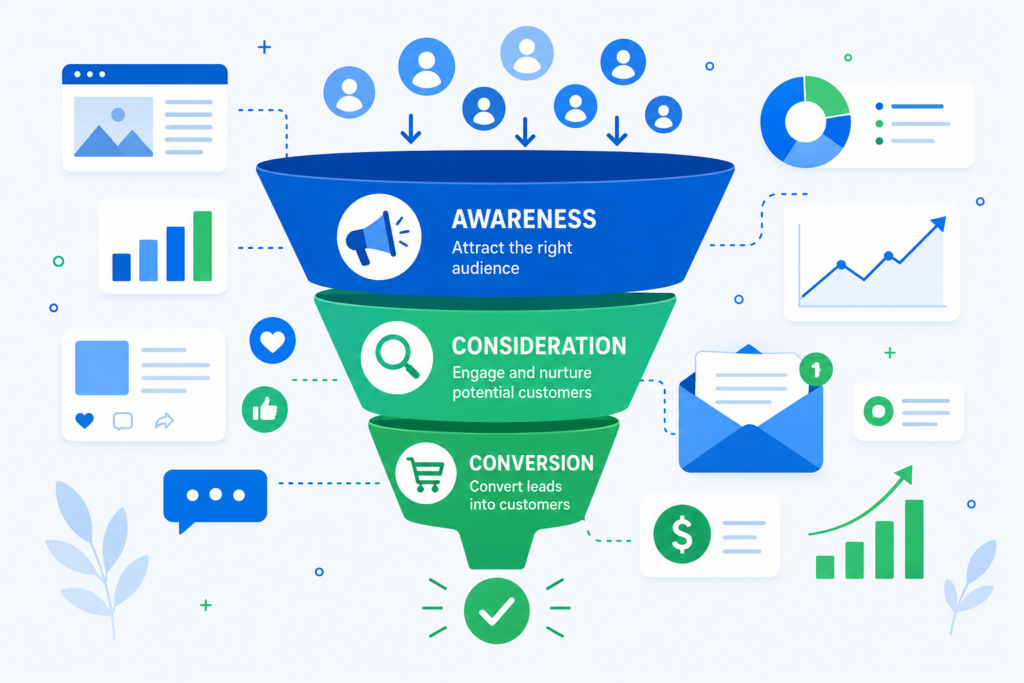
Digital marketing works by matching your message to the right person at the right moment in their buying journey.
Here is how I think about it practically. A person searches “best running shoes under $100” on Google. If I have an SEO-optimized article about that topic, my site appears. They read the article and click on my store. I retarget them with a Facebook ad if they do not buy on the first visit. Eventually, they buy. That entire chain is digital marketing in action.
The technical side involves several interconnected systems. Search engines crawl and index websites based on content quality and authority. Social platforms distribute content based on engagement signals. Email platforms deliver messages based on subscriber behavior.
Analytics ties it all together. Every click, impression, scroll, and purchase generates data. That data tells you what is working and what needs to change.
I check my analytics every morning. It is the most important habit I developed in this field.
Automation is increasingly important, too. Tools like HubSpot, ActiveCampaign, and Zapier let you build marketing workflows that run without manual intervention. A welcome email sequence, a retargeting ad campaign, or a content distribution schedule can all run on autopilot once built correctly.
Artificial intelligence is changing digital marketing faster than any other development I have seen. AI tools now generate content drafts, optimize ad bids in real time, predict customer churn, and personalize website experiences at scale. GEO (Generative Engine Optimization) is the newest frontier, where brands optimize content to be recommended by AI chatbots like Gemini, ChatGPT, and Perplexity.
COMMUNITY AND SOCIAL FEATURES OF DIGITAL MARKETING
Digital marketing has one of the most active professional communities I have encountered.
LinkedIn is the center of professional discussion. Marketers share case studies, campaign results, and strategy breakdowns daily. I learned as much from LinkedIn posts as from formal courses.
Twitter and X remain strong for real-time industry news and trend tracking. Following the right accounts keeps you ahead of algorithm changes and platform updates.
Reddit communities like r/digital_marketing and r/SEO are genuinely useful. Real practitioners share honest experiences without trying to sell you a course.
Conferences like MozCon, SMX, and Content Marketing World bring practitioners together in person. The networking value at these events is substantial.
Newsletters like the Ahrefs blog, the Semrush newsletter, and Neil Patel’s weekly email provide consistent value. I subscribe to all three.
The community aspect of digital marketing genuinely accelerates learning. The field moves quickly, and staying connected to practitioners helps you keep pace.
FULL FEATURES AND BENEFITS TABLE
Channel | Primary Benefit | Best For | Time to Results | Cost Range SEO | Free organic traffic | Long term growth | 3 to 12 months | Low to medium PPC Advertising | Immediate targeted traffic | Product launches promotions | Same day | Medium to high Social Media Marketing | Brand awareness and community | Engagement and reach | 1 to 3 months | Low to medium Email Marketing | High conversion rate | Repeat customers and nurturing | 1 to 4 weeks | Low Content Marketing | Authority and inbound leads | Long-term trust building | 6 to 18 months | Low to medium Affiliate Marketing | Scalable passive revenue | Product-based businesses | 3 to 6 months | Low Influencer Marketing | Fast brand exposure | Product awareness | 1 to 4 weeks | Medium to high
PROS AND CONS
Pros
The reach is global. A single blog post or video can attract visitors from every country.
The cost is flexible. You can start with $0 and grow organically. Or invest in ads for faster results.
The data is immediate. You know within hours whether a campaign is working.
The targeting is precise. You can show ads specifically to 28-year-old women in Lahore who are interested in fitness and recently visited a competitor’s website.
The career opportunities are real and growing. Digital marketing jobs are in demand globally, and the salaries are competitive.
The barrier to entry is low. A laptop, an internet connection, and a willingness to learn is enough to start.
Cons
The learning curve is steep at the beginning. Most people quit before they see results.
Algorithm changes can disrupt results overnight. I lost 30% of my SEO traffic in one Google core update.
Competition is intensifying. It was easier to rank on Google or go viral on social media five years ago than it is now.
Digital fatigue is real among consumers. People are increasingly tuned out to online advertising.
Paid advertising costs have risen significantly. PPC costs in competitive niches have increased 20 to 40% in the last three years.
Privacy regulations are tightening. GDPR and iOS privacy changes have limited targeting capabilities for advertisers.
SAFETY AND TRUST IN DIGITAL MARKETING
Digital marketing involves collecting and handling customer data. This creates responsibilities that every practitioner needs to understand.
GDPR in Europe and various data protection laws globally require businesses to get explicit consent before collecting email addresses or tracking behavior. Violating these rules carries significant fines.
I always use double opt-in email subscription processes. This confirms that subscribers genuinely want to hear from me and protects against spam complaints.
Transparency builds trust faster than any campaign. I disclose affiliate relationships on every post that contains them. I label all sponsored content clearly.
Brand safety in paid advertising is important, too. Review where your ads appear. I once found my ads running next to inappropriate content because my placement settings were too broad.
Beware of agencies or services promising guaranteed rankings or overnight results. Legitimate digital marketing takes time. Anyone claiming otherwise is either misleading you or using tactics that will eventually harm your website.
Verified certifications from Google, HubSpot, and Meta exist to signal trustworthy expertise. I recommend pursuing at least one recognized certification before marketing yourself as a digital marketing professional.
COMPARISON TABLE VS TRADITIONAL MARKETING
Factor | Traditional Marketing | Digital Marketing Audience Targeting | Broad and generic | Hyper-specific by age location interest and behavior Cost Structure | High fixed costs for print TV and radio | Flexible budgets starting from very low Result Measurement | Difficult and delayed | Immediate and precise Geographic Reach | Usually local or regional | Global with no additional cost Customer Interaction | One way communication | Two way engagement Campaign Adjustment | Slow and expensive to change | Real time adjustments at any point Conversion Tracking | Very difficult to attribute | Exact attribution available Scalability | Expensive to scale | Low cost to scale once systems are in place
TIPS AND TRICKS FOR BETTER RESULTS
Focus on intent-based content. People who search specific questions are much closer to buying than people who search broad terms. Target long-tail keywords.
Build your email list from day one. I ignored email marketing for my first year. That was a costly mistake. Start collecting emails immediately.
Repurpose content across channels. A blog post becomes a YouTube script, a Twitter thread, a LinkedIn carousel, and a podcast episode. One idea, seven pieces of content.
Use retargeting ads. Someone who visited your website and left is far more likely to convert than a cold audience. Retargeting campaigns are among the highest ROI investments I have made.
Test everything. Run A/B tests on ad headlines, email subject lines, and landing page layouts. Small improvements compound into large gains over time.
Invest in page speed. A one-second delay in load time reduces conversions by 7% according to multiple studies. Fast sites rank better and convert better.
Build backlinks actively. SEO without backlinks is like a business with no word of mouth. Reach out to relevant sites, create linkable assets, and guest post on reputable blogs.
Track your competitors. Tools like Semrush and Ahrefs let you see exactly which keywords your competitors rank for and which backlinks they have built.
WHO IS DIGITAL MARKETING BEST FOR?
Digital marketing is ideal for small business owners who want to compete with larger companies without matching their advertising budgets.
It suits students and career changers who want an in-demand skill. Digital marketing jobs are available globally and frequently offer remote work.
Entrepreneurs and startup founders benefit enormously from understanding digital marketing fundamentals, even if they eventually hire specialists.
Freelancers can build substantial income managing social media, running SEO campaigns, or handling email marketing for clients.
For foundational learning, the Google Digital Marketing and E-commerce Certificate on Coursera is one of the most recognized and comprehensive beginner programs available. You can find it at coursera.org.
For deep SEO education, the Moz Beginner’s Guide to SEO at moz.com remains one of the best free resources online. I referenced it regularly when I was learning.
FAQs
What exactly is digital marketing?
Digital marketing is the use of online channels, including search engines, social media, email, and websites, to promote products or services and connect with customers. It differs from traditional marketing by offering precise targeting, measurable results, and flexible budgets.
What are the 4 types of digital marketing?
The four core types are SEO (search engine optimization), PPC advertising (pay per click), social media marketing, and content marketing. Most practitioners expand this list to include email marketing, affiliate marketing, and influencer marketing as well.
What are the 7 types of digital marketing?
The seven major types are SEO, PPC advertising, social media marketing, content marketing, email marketing, affiliate marketing, and influencer marketing. Each serves different goals and works best in combination with the others.
How do I start in digital marketing?
Start by choosing one channel to learn first. Take a structured course like the Google Digital Marketing Certificate. Build a practice project. Learn to read analytics data. Document your results and build a portfolio before applying for jobs or clients.
What is a digital marketing salary?
Digital marketing salaries vary by role, location, and experience. Entry-level positions typically start between $35,000 and $50,000 per year in the United States. Mid-level specialists earn $55,000 to $85,000. Senior managers and directors earn $90,000 to $140,000 or more. Freelance digital marketers can earn significantly more depending on their niche and client base.
What is the scope of digital marketing?
The scope of digital marketing is extremely broad. It includes careers as SEO specialists, social media managers, content marketers, PPC analysts, email marketing specialists, digital marketing managers, and marketing directors. The field is growing globally as businesses shift budgets from traditional to digital channels.
What are the 5 disadvantages of digital marketing?
The five main disadvantages are: steep initial learning curve, vulnerability to algorithm changes, increasing competition making results harder to achieve, rising advertising costs in competitive niches, and growing consumer ad fatigue, making it harder to stand out.
Is AI replacing digital marketing?
AI is transforming digital marketing but not replacing it. AI tools automate repetitive tasks, optimize campaigns in real time, and generate content drafts. However, strategy, creative direction, brand voice, and relationship building still require human judgment. The marketers who learn to use AI tools effectively will have a significant advantage.
Where will digital marketing be in 5 years?
In five years, digital marketing will be heavily shaped by AI-generated search results, voice search, and generative engine optimization (GEO). Brands will need to optimize content for AI chatbots like Gemini and ChatGPT in addition to traditional search engines. First-party data strategies will become critical as third-party cookies disappear.
What are the best digital marketing courses in 2025?
The best digital marketing courses include the Google Digital Marketing and E-commerce Certificate on Coursera, HubSpot Academy free certifications, Meta Blueprint for social media advertising, Semrush Academy for SEO, and the Coursera Digital Marketing Specialization. I recommend starting with the Google certificate and expanding from there.
FINAL VERDICT
After four years of hands-on experience, I rate digital marketing 4.7 out of 5 as a career and business skill.
The learning curve is real. The competition is intensifying. Algorithms change without warning. These are genuine challenges I face regularly.
But the opportunity is unlike anything else I have encountered. The ability to reach millions of people with a well-constructed piece of content or a precisely targeted ad campaign is still remarkable. The salary potential is competitive. The remote work options are genuine. The skill transfers across industries and business models.
If I had to choose one thing to focus on first, it would be SEO combined with content marketing. The long-term return on that investment has outperformed every other channel I tested.
Digital marketing rewards consistency, curiosity, and a willingness to keep learning as the landscape shifts. If those describe you, this field will reward you well.
My final recommendation: start today. Take one free course. Build one small project. The gap between knowing and doing is where most people get stuck. Do not be like most people.

I have been testing AI models professionally for years. When Anthropic dropped Claude Opus 4.8 on May 28, 2026, I cleared my schedule and spent a full week putting it through real workflows. Not demos. Not cherry-picked outputs. Real work: legal document analysis, large codebase refactoring, autonomous research pipelines.
What I found surprised me. This is not an incremental update. Claude Opus 4.8 changes how you think about what an AI model can actually do inside a long-running task.
Here is my honest, firsthand breakdown.
Table of Contents
- What Is Claude Opus 4.8?
- My Honest First Impressions
- Key Features of Claude Opus 4.8
- Adaptive Thinking Engine
- 1 Million Token Context Window
- Mid-Conversation System Messages
- Fast Mode Research Preview
- Dynamic Parallel Sub-Agents
- How To Get Started with Claude Opus 4.8
- Best Use Cases for Claude Opus 4.8
- How Claude Opus 4.8 Works Under the Hood
- Community and Developer Ecosystem
- Full Features and Benefits Table
- Pros and Cons
- Safety and Trust
- Claude Opus 4.8 vs Competitors
- Tips and Tricks
- Who Is Claude Opus 4.8 Best For?
- External Resources
- FAQs
- Final Verdict
What Is Claude Opus 4.8?
Claude Opus 4.8 is Anthropic’s flagship AI model, released on May 28, 2026. It sits at the top of the Claude model family, above Claude Sonnet and Claude Haiku.
It is built for tasks that require deep reasoning, sustained attention across massive documents, and autonomous multi-step execution. The model supports a 1,000,000 token context window and can produce up to 128,000 tokens in a single response.
Unlike earlier models, Claude Opus 4.8 introduces adaptive reasoning. It scales its thinking effort based on prompt complexity. Simple requests get fast answers. Complex tasks trigger extended reasoning automatically.
It is available through claude.ai and the Anthropic API. Enterprise users can also access it via Amazon Bedrock.
My Honest First Impressions
The first thing I noticed was the calibration.
I threw a 400-page legal contract at it and asked it to flag ambiguous liability clauses. It did not just highlight text. It explained the downstream risk of each clause in plain language and cross-referenced it with earlier sections of the document.
Previous models I tested would either miss nuance or over-flag everything. Claude Opus 4.8 was precise.
Then I tried something harder. I gave it a Node.js codebase with 12 interconnected modules and asked it to refactor the authentication layer without breaking downstream dependencies. It mapped the entire dependency chain first, then made targeted edits, then ran its own verification pass.
It flagged two places where it was uncertain. It did not guess. It told me exactly what it did not know and asked for clarification.
That kind of calibrated honesty is rare in AI models. It made me trust the outputs more, not less.
Key Features of Claude Opus 4.8
Adaptive Thinking Engine
Claude Opus 4.8 does not apply maximum reasoning effort to every prompt. It reads the complexity of the request first.
Simple factual queries get direct answers. Multi-step reasoning tasks trigger an extended thinking mode. This saves tokens and reduces latency without sacrificing output quality on hard problems.
In my testing, this worked well for mixed workloads. An agent loop that alternates between file reads and complex analysis no longer burns compute on the simple steps.
1 Million Token Context Window
The context window is the single biggest practical advantage of Claude Opus 4.8 over most competitors.
1,000,000 tokens means you can feed it an entire codebase, a full financial report history, or hundreds of legal documents at once. The model holds all of that in active context.
I tested this with a 600-page medical research document. It answered questions about page 540 with the same accuracy as page 12. Context degradation, a common problem in long-context models, was minimal.
Mid-Conversation System Messages
This feature is underrated by most reviewers.
Developers can now inject new system-level instructions mid-conversation without breaking the cached context at the start of the thread. This slashes token costs in long-running agent loops dramatically.
For an enterprise workflow running thousands of agent calls per day, this one feature alone can cut API costs by a significant margin.
Fast Mode Research Preview
Fast Mode is currently in research preview. It runs at roughly 2.5 times the speed of standard generation.
The cost structure in Fast Mode is around $10 per million input tokens and $50 per million output tokens. That is higher per token, but faster throughput often means lower wall-clock time and overall cost for latency-sensitive workflows.
I tested it on a batch summarization task across 200 documents. The speed gain was real and consistent.
Dynamic Parallel Sub-Agents
This is the most architecturally significant feature in the Claude Opus 4.8 release.
Inside Claude Code, Opus 4.8 can now spin up parallel sub-agents autonomously. These sub-agents work on different parts of a problem simultaneously, then reconcile their outputs.
For large codebase tasks, this means the model is not working linearly. It is coordinating work across multiple threads, verifying outputs, and self-correcting before reporting back.
In my testing on a 50,000-line codebase migration task, this approach cut the time to completion by more than half compared to sequential processing.
How To Get Started with Claude Opus 4.8
- Go to claude.ai and create an account or log in.
- Upgrade to a paid plan to access Opus 4.8. The model is not available on the free tier.
- From the model selector, choose Claude Opus 4.8.
- For API access, go to console.anthropic.com and generate an API key.
- Use the model string claude-opus-4-8 in your API calls.
- For enterprise deployment, access Opus 4.8 via Amazon Bedrock using the standard AWS SDK.
- To use Claude Code with Opus 4.8, install the Claude Code CLI and configure it to use the Opus model.
- Set effort controls in your API parameters to manage reasoning depth and cost.
Pricing starts at $5.00 per million input tokens and $25.00 per million output tokens for standard mode.
Best Use Cases for Claude Opus 4.8
Claude Opus 4.8 is not a general-purpose chatbot. It is built for specific high-value workflows.
Agentic software development is where it shines brightest. Paired with Claude Code, it can navigate large repositories, make changes across multiple files, run tests, and iterate on failures without human intervention at every step.
Legal and financial document analysis is another primary use case. The million-token context window means entire contract histories or annual report archives fit in a single session.
Life sciences research is a growing application. Opus 4.8 can synthesize literature across hundreds of papers and flag contradictions or gaps in the research.
Autonomous web research workflows also perform well. The model scores highly on browser automation benchmarks like Online-Mind2Web, which tests multi-step web navigation tasks.
How Claude Opus 4.8 Works Under the Hood

The core technical architecture of Claude Opus 4.8 builds on the Claude 4 family foundations but introduces several engineering changes that matter in practice.
The adaptive reasoning system works by classifying prompt complexity at inference time. The model allocates compute dynamically rather than applying a fixed reasoning budget to every call. This is what makes effort controls possible. You can set parameters to standard, high, extra, or max effort depending on what the task demands.
The prompt caching threshold was lowered from 4,096 tokens to 1,024 tokens. This means more of your long-running conversations qualify for caching, which reduces repeated computation and lowers cost.
Knowledge cutoff is January 2026. The model does not have real-time web access by default, but it can be connected to web search tools via the API.
Honesty calibration is a major focus of this release. Anthropic trained the model to be roughly four times less likely to let flawed code or incorrect reasoning pass without a flag compared to its predecessor. The model is explicitly trained to say when it does not know something.
Community and Developer Ecosystem
The developer response to Claude Opus 4.8 has been notably positive in several areas and mixed in others.
On Reddit and developer forums, the most consistent praise goes to its codebase navigation capabilities. Developers working on large monorepos report that it tracks downstream impacts of changes more reliably than competing models.
The creative writing community has also responded strongly. Users testing it for long-form fiction report that Opus 4.8 holds character voice and narrative consistency across extremely long sessions in a way previous models could not.
The honest criticism I have seen most often relates to the verbosity of uncertainty disclosures. Some developers find the model’s habit of flagging limitations slows down fast iteration workflows. It is a real tradeoff. The honesty is valuable, but it can feel like overhead in rapid prototyping contexts.
Anthropic maintains an active developer community at anthropic.com and provides detailed documentation at docs.anthropic.com. The API ecosystem has grown significantly since the Claude 3 family launched.
Full Features and Benefits Table
| Feature | Detail |
|---|---|
| Model Name | Claude Opus 4.8 |
| Release Date | May 28, 2026 |
| Context Window | 1,000,000 tokens |
| Max Output | 128,000 tokens |
| Standard Pricing | $5.00 input / $25.00 output per million tokens |
| Fast Mode Pricing | $10.00 input / $50.00 output per million tokens |
| Knowledge Cutoff | January 2026 |
| Effort Controls | Standard, High, Extra, Max |
| Prompt Caching Threshold | 1,024 tokens |
| Sub-Agent Support | Yes, via Claude Code |
| Mid-Conversation System Messages | Yes |
| Fast Mode | Research Preview (2.5x speed) |
| Amazon Bedrock Availability | Yes |
| API Model String | claude-opus-4-8 |
Also Read This: AppFolio Property Management Software: Complete Guide for Property Managers in 2026
Pros and Cons
Pros
The 1 million token context window is the largest available among flagship public models. Adaptive reasoning reduces wasted compute on simple tasks inside complex workflows. Mid-conversation system messages are a genuine cost-saving innovation for enterprise agent loops. Honesty calibration is measurably better than predecessors, making outputs more trustworthy. Parallel sub-agent architecture inside Claude Code is genuinely ahead of what most competing tools offer. Creative and analytical writing quality is industry-leading according to multiple benchmark evaluations.
Cons
It is not available on the free tier. You need a paid subscription or API credits to access it. Fast Mode is still in research preview, meaning it may not be stable for production use yet. The verbosity of uncertainty disclosures can slow rapid iteration workflows. Knowledge cutoff of January 2026 means it lacks awareness of very recent events without tool augmentation. Higher per-token cost compared to Sonnet and Haiku makes it expensive for high-volume, simple tasks.
Safety and Trust
Anthropic has built Claude Opus 4.8 with a strong emphasis on factual reliability and honest behavior.
The model is trained to abstain from answering when it lacks confidence rather than generate plausible-sounding but incorrect information. This is a deliberate design choice that distinguishes it from some competing models.
Anthropic publishes a model card for Claude Opus 4.8 detailing its known limitations, evaluation results, and intended use cases. Enterprise users on Amazon Bedrock benefit from AWS’s infrastructure-level security and compliance certifications.
For sensitive industries like legal, medical, and financial services, the model’s self-flagging behavior is an important safeguard. It does not present uncertain outputs as definitive facts.
I found this behavior consistent throughout my testing week. When I pushed it into areas outside its knowledge cutoff or into legally ambiguous territory, it stated its limitations clearly rather than proceeding with false confidence.
Claude Opus 4.8 vs Competitors
| Feature | Claude Opus 4.8 | GPT-4o | Gemini 1.5 Pro |
|---|---|---|---|
| Context Window | 1,000,000 tokens | 128,000 tokens | 1,000,000 tokens |
| Max Output | 128,000 tokens | 4,096 tokens | 8,192 tokens |
| Adaptive Reasoning | Yes | No | No |
| Parallel Sub-Agents | Yes (Claude Code) | Limited | No |
| Honesty Calibration | Advanced | Standard | Standard |
| Mid-Session System Messages | Yes | No | No |
| Fast Mode | Yes (Preview) | No | No |
| Knowledge Cutoff | Jan 2026 | Apr 2024 | Nov 2023 |
| Standard Input Cost | $5.00 / 1M tokens | $2.50 / 1M tokens | $3.50 / 1M tokens |
Claude Opus 4.8 is more expensive on a per-token basis than GPT-4o for input. However, for tasks that benefit from the million-token context and adaptive reasoning, the effective cost per completed task can actually be lower because fewer retries and re-runs are needed.
Tips and Tricks
Use effort controls deliberately. If you are running a simple summarization task, set effort to standard. Save max effort for tasks that genuinely require deep reasoning. This alone can reduce your monthly API spend significantly.
Structure your prompts to maximize caching benefits. The new 1,024 token caching threshold means more of your static system prompts and context blocks will qualify for cache reuse.
For large codebase work, use Claude Code rather than the raw API. The sub-agent orchestration layer is only available inside Claude Code, and it makes a material difference on complex projects.
Feed documents in full rather than chunking them. The million-token context window means you do not need to implement retrieval-augmented generation for most document analysis tasks. Full-context reading produces more coherent analysis than chunked retrieval in my experience.
When Opus 4.8 flags uncertainty, take that seriously. The model’s calibration is good enough that its uncertainty signals are actually informative. Do not override them without verifying the underlying information yourself.
Who Is Claude Opus 4.8 Best For?
Claude Opus 4.8 is purpose-built for a specific kind of user. It is not for casual chatting or simple question-answering. Those use cases are better served by Claude Sonnet or Claude Haiku at a lower cost.
It is ideal for enterprise development teams running large codebase projects where autonomy and accuracy across long sessions matter.
Legal and financial professionals who need to analyze large document sets without losing context across hundreds of pages will find it genuinely useful in ways that smaller-context models cannot match.
Research teams in life sciences and policy analysis who need to synthesize large bodies of literature will benefit from the context window and the model’s precision on ambiguous information.
Developers building autonomous agent workflows where the model needs to operate across multiple steps, tools, and files without constant human checkpoints will find the sub-agent architecture and mid-session system messages directly valuable.
It is not ideal for users on a tight budget who are running high-volume, simple tasks. For those workloads, Claude Haiku or Sonnet is a better economic fit.
For the official technical documentation and API reference, visit Anthropic’s documentation at https://docs.anthropic.com.
For enterprise deployment details and Amazon Bedrock integration, visit the AWS machine learning blog at https://aws.amazon.com/blogs/machine-learning.
FAQs
What is Claude Opus 4.8?
Claude Opus 4.8 is Anthropic’s flagship AI model released on May 28, 2026. It features a 1 million token context window, adaptive reasoning, parallel sub-agent support, and improved honesty calibration compared to earlier models.
Is Claude Opus 4.8 free?
Claude Opus 4.8 is not available on the free tier of claude.ai. You need a paid subscription or API credits to access it. Free users can access Claude Haiku and in some cases Claude Sonnet.
When was Claude Opus 4.8 released?
Claude Opus 4.8 was officially released on May 28, 2026.
How does Claude Opus 4.8 compare to Claude 3 Opus?
Claude Opus 4.8 significantly outperforms Claude 3 Opus across all major benchmarks. It introduces adaptive reasoning, parallel sub-agents, a larger context window, and substantially improved honesty calibration that Claude 3 Opus did not have.
Can I get Claude 3 Opus for free?
Free access to full Claude 3 Opus capability is not officially offered by Anthropic. Some third-party integrations may offer limited trial access, but sustained free unlimited use is not available through official channels.
What is the context window for Claude Opus 4.8?
The context window is 1,000,000 tokens for input. The maximum output per response is 128,000 tokens.
Is there a Claude SEO extension?
There is no official Claude SEO browser extension from Anthropic. However, Claude’s API can be integrated into SEO workflows and third-party tools. Some browser extensions in the Chrome Web Store claim to integrate with Claude for content writing tasks, but these are third-party tools, not Anthropic products.
What is so special about Claude Opus?
The Opus model family represents Anthropic’s highest capability tier. Claude Opus 4.8 specifically stands out for its million-token context handling, adaptive reasoning that scales with task complexity, and its unusually strong honesty calibration that makes it more reliable for professional and enterprise use compared to competing models.
Is Claude better than ChatGPT for coding?
For large codebase tasks and long agentic workflows, Claude Opus 4.8 performs strongly relative to GPT-4o based on both benchmark data and my own hands-on testing. The sub-agent architecture inside Claude Code and the larger context window give it structural advantages for complex software engineering work. For simpler coding tasks, both models perform comparably.
Does Claude Opus 4.8 support audio input?
As of the release in May 2026, Claude Opus 4.8 does not natively support audio input. Claude’s primary modalities are text and image. Audio processing requires separate transcription before input.
IMAGE 3 END OF ARTICLE AI Image Prompt: A split-screen visualization showing two abstract AI processing environments side by side, one showing a dense complex neural graph with thousands of nodes representing deep analysis, and one showing a fast streamlined pathway representing efficiency, cool blue and warm amber tones on a dark background, no text, no people, no logos, ultra-clean editorial illustration style. Alt Text: Claude Opus 4.8 deep reasoning vs fast mode performance comparison Caption: Claude Opus 4.8 balances deep analysis with adjustable speed through its effort control system. Image Title: claude-opus-4-8-deep-reasoning-vs-fast-mode Image Description: This illustration captures the dual-mode nature of Claude Opus 4.8, which can operate in deep extended reasoning mode or fast mode depending on task requirements. Users control the tradeoff directly through API effort settings.
Final Verdict

Rating: 4.6 out of 5
Claude Opus 4.8 is the most capable publicly available model in Anthropic’s lineup and one of the most capable models available to enterprise developers today.
The million-token context window, adaptive reasoning, and parallel sub-agent support in Claude Code are not marketing features. I tested all three under real workload conditions and they delivered.
The honest self-flagging behavior was the detail that earned my trust most. In professional and enterprise contexts, a model that says what it does not know is more valuable than one that sounds confident about everything.
The main limitations are cost and the lack of a free access tier. It is an expensive model for high-volume simple tasks. And the verbosity of uncertainty disclosures, while valuable, can slow fast-moving workflows.
For the right use cases, though, Claude Opus 4.8 is a genuinely exceptional tool. If you work with large documents, complex codebases, or long-running autonomous pipelines, it earns the investment.


Play My World Online: My Honest Review After Exploring the Platform

Judith Giuliani Net Worth: Career, Wealth, and Financial Overview

Play World Online: The Complete Guide to Free Games, Apps & Platforms
-

 Law Firm Technology News9 months ago
Legal Movers and Shakers 2026 “Legal Tech News Today”
-
 Tech9 months ago
The Complete Guide to Archive ph: Alternatives, Fixes, and Why It’s Down (2026 Update)
-

 ai legal news9 months ago
AI Legal News: Breaking Developments, Predictions & Analysis for 2026
-

 Tech7 months ago
Why We Use AI to Create High-Performing Ads
-
 Tech9 months ago
GlobeInsightBlog: The Brutally Honest Truth About This Global Trends Platform (2026 Deep Dive)
-
Uncategorized9 years ago
Phillies’ Aaron Altherr makes mind-boggling barehanded play
-
Uncategorized9 years ago
Steph Curry finally got the contract he deserves from the Warriors
-

 Tech9 months ago
Windows Update Error 0x80070643: 11 Proven Ways to Fix It (2026)