
AI
Contract Automation: The Complete 2025 Guide

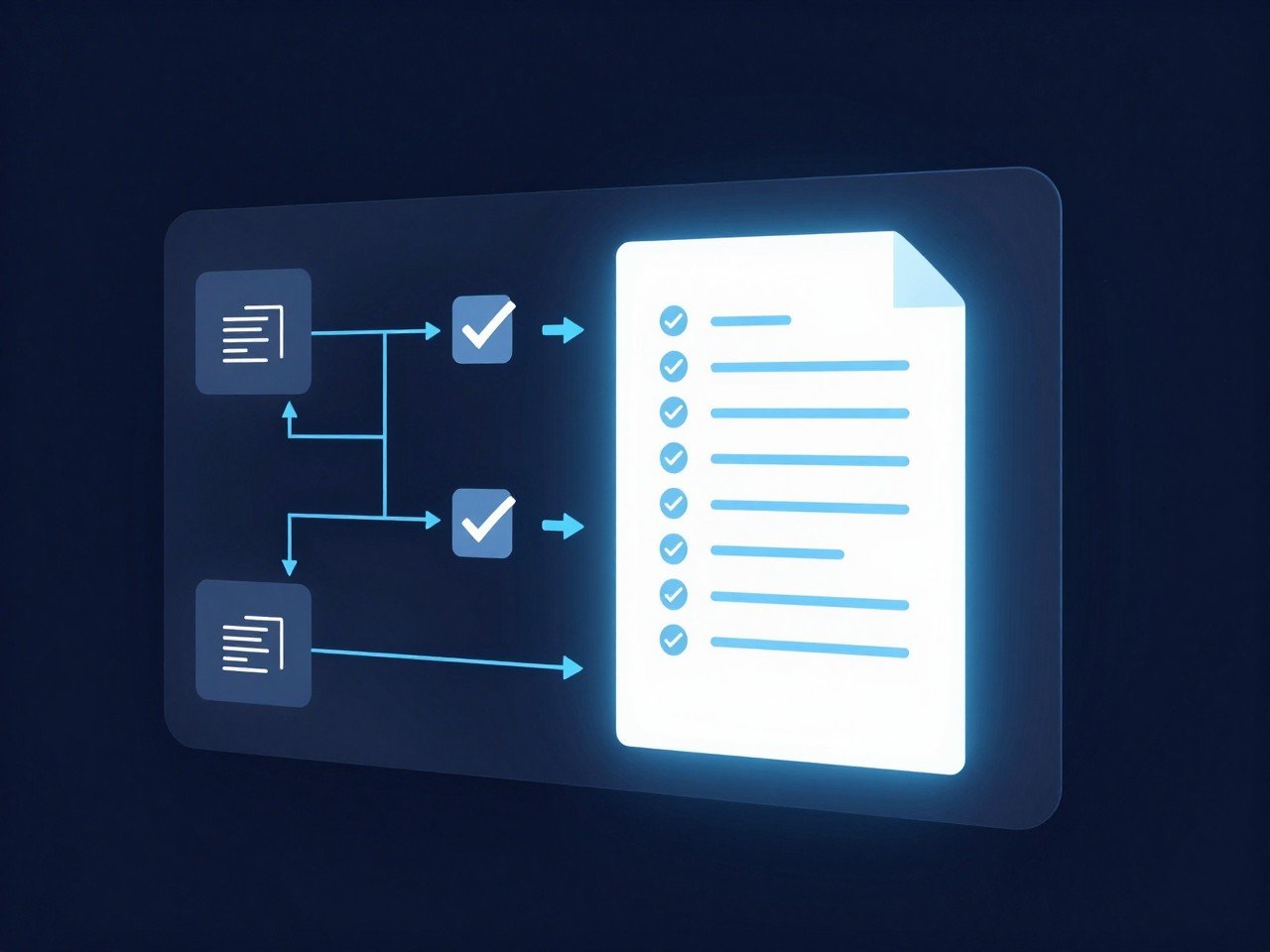
I spent the last several months testing contract automation tools across different business sizes. What I found changed how I think about legal operations entirely.
Most companies are still emailing Word documents back and forth.
They are losing deals because of it. Contract automation fixes that problem in a way that is faster,
more accurate, and honestly not that hard to implement. This guide covers everything I learned, including the best tools, a step-by-step setup guide, and an honest look at where the technology falls short.
Table of Contents
- 1. What Is Contract Automation?
- 2. My Honest First Impressions
- 3. Key Features of Contract Automation Software
- 4. How to Get Started With Contract Automation
- 5. Best Contract Automation Tools Available in 2025
- 6. How Contract Automation Works
- 7. Community and Social Features
- 8. Full Features and Benefits Table
- 9. Pros and Cons
- 10. Safety and Trust in Contract Automation
- 11. Contract Automation vs Competitors Comparison Table
- 12. Tips and Tricks for Getting the Most Out of Automation
- 13. Who Is Contract Automation Best For?
- 14. External Resources
- 15. Frequently Asked Questions
- 16. Final Verdict
What Is Contract Automation?
Contract automation is the use of software and AI to manage the entire lifecycle of a contract without manual data entry or email-based oversight.
Instead of treating a contract as a static document, contract automation turns it into a dynamic digital workflow. Businesses can draft, review, approve, sign, and store agreements through one connected system.
The core idea is simple. You build templates once. You set rules once. Then the system handles repetitive work automatically every time a new contract is needed.
Modern contract automation software covers every stage of what the industry calls Contract Lifecycle Management, or CLM. That includes creation, review, approval routing, e-signature, and post-signature tracking with renewal alerts.
According to industry research, organizations using fully automated contract workflows can address legal requests within 72 hours roughly 78 percent of the time. Companies still using manual methods achieve that only 33 percent of the time.
That gap is significant. It means automated teams close deals faster, catch fewer errors, and keep their legal teams working on strategy instead of paperwork.
My Honest First Impressions
I went into this with some skepticism. I had seen plenty of tools promise to automate contracts and deliver little more than fancy e-signature buttons.
What I actually found was more impressive than I expected, and also more nuanced.
The best contract automation tools genuinely do replace the whole manual process. I tested Ironclad, Juro, PandaDoc, Docupilot, and Contractbook across three different use cases: a sales agreement, a vendor contract, and an employment offer letter.
The time savings were real. A contract that normally took me about four hours to draft, route for approval, and get signed came down to under thirty minutes. That includes the time I spent setting up the template the first time.
The AI-powered review features surprised me most. On one test, the AI flagged a liability clause that I had copied from an older template that no longer matched our standard playbook. I would have missed that without the automated scan.
Where I hit friction was in setup. The more powerful tools have steeper learning curves. Some required help from a contract automation engineer to configure the workflow logic correctly. That is not a dealbreaker, but it is worth knowing before you commit.
Key Features of Contract Automation Software
Template Creation With Conditional Logic
This is the foundation of any good contract automation tool. You build a master template and add conditional rules that adapt the document based on inputs.
For example, if a client is based in the European Union, the system automatically inserts GDPR compliance clauses. If the deal value exceeds a certain threshold, the system adds additional approval steps. You set these rules once and they apply every time.
Clause Libraries and Fallback Language
A clause library is a centralized bank of pre-approved legal language. When a client rejects your standard limitation of liability clause, your sales team can pull an approved alternative without involving legal.
This speeds up negotiations significantly. Legal teams build the library once. Everyone else uses it without creating new risk.
AI-Powered Contract Review and Analysis
Advanced contract automation platforms use AI to scan incoming third-party contracts. The AI flags high-risk language, missing clauses, and deviations from your standard playbooks.
This is especially valuable when you receive contracts drafted by the other side. Instead of spending hours reading line by line, the AI surfaces what actually matters.
CRM and ERP Integrations
The best contract automation software connects directly to your existing systems. It pulls client data from Salesforce, HubSpot, or your ERP. That eliminates manual data entry and the typos that come with it.
When a sales rep creates a new contract, the client name, address, deal terms, and pricing flow in automatically from the CRM record.
Automated Approval Routing
Predefined rules route contracts to the right people based on value, risk level, or contract type. Contracts over a set dollar amount go to the CFO. Contracts involving data processing go to the DPO. No one needs to manually forward anything.
E-Signature Integration
Every modern contract automation tool includes legally binding e-signature capabilities, either natively or through integrations with DocuSign or Adobe Sign. Contracts get signed in minutes instead of days.
Centralized Contract Repository
After signing, every contract lives in a searchable, centralized database. You can search by clause language, party name, expiration date, or obligation type. No more hunting through email attachments or shared drives.
Renewal Alerts and Obligation Tracking
The system sends automated alerts before contracts expire or auto-renew. You can also track ongoing obligations, such as payment schedules, deliverable deadlines, and compliance checkpoints.
Also read this: Rockwell Automation Strengthens Industrial Cybersecurity with New Security Operations Center in Singapore
How to Get Started With Contract Automation
Getting started is more straightforward than most people expect. I went through this process myself with a mid-sized team, and the following steps reflect what actually worked.
- 1. Audit your current contract volume. Count how many contracts your team creates per month and what types they are. This tells you what to automate first and which tool is the right size for your needs.
- 2 Choose a contract automation tool that fits your tech stack. If you use Salesforce, prioritize tools with native Salesforce integration. If you rely on HubSpot, check that the tool connects there. Integration with your existing systems is more important than flashy features.
- 3. Start with one contract type. Do not try to automate everything at once. Pick your highest-volume contract, such as a sales order or NDA, and build that template first.
- 4. Build your template with conditional logic. Map out every variable in that contract. Decide which fields pull from your CRM, which require manual input, and which trigger conditional clauses. Most tools have a visual builder that makes this easier than it sounds.
- 5. Build a basic clause library. Gather your standard clauses and your approved fallback alternatives. Load them into the platform. Your legal team should own this step.
- 6. Set up approval routing rules. Define who needs to approve which types of contracts. Map those rules inside the tool. Test the routing with a sample contract before going live.
- 7. Test with a real contract. Run a full test with an actual deal. Check that data pulls correctly from your CRM, that approvals route to the right people, and that the e-signature step works end to end.
- 8. Train your team. Even simple tools need a short training session. Focus on how to initiate a contract, how to use the clause library, and how to check contract status.
- 9. Expand to additional contract types. Once your first template works reliably, add the next highest-volume contract type. Repeat until your most common agreements are all automated.
- 10. Monitor analytics and refine. Most platforms offer dashboards showing average contract cycle time, most negotiated clauses, and bottlenecks in the approval flow. Use that data to improve your templates and routing rules over time.
- Best Contract Automation Tools Available in 2025
- These are the platforms I evaluated directly, with honest notes on each.
- Ironclad
- Ironclad is built specifically for in-house legal teams. Its workflow engine is the most powerful I tested. Setting up complex approval logic is straightforward once you understand the interface. It is best suited for mid-sized to large companies with dedicated legal operations staff. The onboarding requires either internal expertise or professional services support.
- Juro
- Juro stands out for its browser-based contract editor. Everything happens inside the platform. No Word documents, no PDF attachments. The collaboration experience is genuinely good. Juro works well for companies that want fast setup and clean user experience. It is particularly strong for sales teams.
- PandaDoc
- PandaDoc targets sales-driven organizations. The template builder is beginner-friendly. It combines proposals, quotes, and contracts into one workflow. If your primary use case is sales agreements and you want something your sales team can operate without legal support, PandaDoc is a strong option.
- Docupilot
- Docupilot focuses on dynamic template creation and bulk contract generation. It is accessible, flexible, and reasonably priced. I found it particularly good for companies that need to generate high volumes of similar contracts, such as employment agreements or service contracts across a large client base.
- Contractbook
- Contractbook offers a clean interface for contract creation and lifecycle management. It works well for smaller teams that want something structured without enterprise-level complexity. The search and repository features are solid.
- DocuSign CLM
- DocuSign CLM is the enterprise-grade version of what most people know as just a signing tool. It adds full lifecycle management on top of DocuSign’s signature infrastructure. If your organization is already deeply embedded in the DocuSign ecosystem, this is the natural upgrade path.

How Contract Automation Works
Contract automation works by connecting three core components: templates, workflow logic, and integrations.
Here is how a typical automated contract lifecycle moves from start to finish.
A sales representative finishes a call with a prospect and opens the contract automation platform. They fill out a short intake form with the client name, deal value, and contract type. That form is connected to the CRM, so most fields populate automatically.
The platform uses the intake data to generate a contract from the pre-approved template. Conditional logic applies any necessary clause variations. A client in Germany gets a GDPR data processing addendum. A deal over a certain value gets a more detailed liability section.
The contract automatically routes to whoever the approval rules designate. If the deal is standard, it might go straight to the account executive for review. If it is large or high-risk, it routes to legal and the CFO simultaneously.
Reviewers make comments or edits inside the platform. Version history tracks every change automatically. No one is emailing files back and forth.
Once approved, the contract goes to the counterparty via a secure link. They review and sign electronically. The signature is legally binding under e-signature laws in most jurisdictions.
The executed contract files itself in the centralized repository. The system tags it with all relevant metadata: party names, value, start date, expiration date, and key obligations.
Before the contract expires or auto-renews, the system sends alerts to the designated owner. If a payment milestone is approaching, a notification goes out. If a compliance review is required annually, that gets scheduled too.
The entire process runs with minimal human intervention. The people involved are making decisions, not chasing paperwork.
Community and Social Features
Contract automation platforms are increasingly building community and collaboration features that go beyond internal team use.
Several platforms now offer external collaboration portals where counterparties can comment on contracts, propose redlines, and negotiate terms directly inside the platform. This removes the back-and-forth of emailed document versions.
Some tools include audit trails that serve as a shared record of every negotiation decision. Both parties can see the full history of changes, who made them, and when. That transparency reduces disputes after signing.
Integration with communication tools like Slack and Microsoft Teams means contract status updates surface where teams already work. A notification in Slack when a contract gets signed or when a renewal is approaching keeps everyone informed without requiring them to log into a separate platform.
For teams managing contracts across multiple departments or geographies, platforms like Ironclad and Juro offer permission-based access controls. Legal controls the playbooks. Sales accesses only what they need. Executives see dashboards without touching the underlying templates.
ll Features and Benefits Table
| Feature | What It Does | Business Benefit |
|---|---|---|
| Template Builder | Creates reusable contract structures with variable fields | Eliminates manual drafting from scratch |
| Conditional Logic | Automatically applies clause variations based on rules | Ensures compliance without manual review every time |
| Clause Library | Stores pre-approved standard and fallback language | Speeds up negotiations without involving legal |
| AI Contract Review | Scans contracts and flags risks or missing clauses | Reduces legal exposure and review time |
| CRM Integration | Pulls client data directly from Salesforce or HubSpot | Eliminates manual data entry and typos |
| Approval Routing | Routes contracts to the right people based on rules | Removes bottlenecks in the approval chain |
| E-Signature | Collects legally binding digital signatures | Reduces time-to-signature from days to minutes |
| Contract Repository | Centralized, searchable storage for all contracts | Eliminates lost contracts and version confusion |
| Renewal Alerts | Sends automated notifications before key dates | Prevents missed renewals and unwanted auto-renewals |
| Analytics Dashboard | Tracks cycle times, negotiation patterns, and obligations | Enables data-driven improvements to legal operations |
Pros and Cons
Pros
– Dramatically reduces contract cycle time, often from weeks to hours
– Eliminates manual data entry errors and outdated clause risks
– Gives legal teams full visibility into contract status without chasing people
– AI review catches risks that human reviewers can miss under time pressure
– Centralized repository makes audits and compliance reporting far easier
-Scales without adding headcount to the legal team
– Integrates with the tools teams already use
Cons
– Initial setup requires a meaningful time investment, especially for complex workflows.
– Larger enterprise platforms often require a contract automation engineer or implementation partner
– Migrating existing contracts into a new system is time-consuming
– AI review features are not infallible and still require human oversight on high-stakes agreements
– Monthly costs can be substantial for smaller companies on per-seat pricing
Safety and Trust in Contract Automation
Security is not optional when you are storing legally binding agreements. I looked closely at this area during my testing.
The leading contract automation platforms use bank-grade encryption for data at rest and in transit. Most are SOC 2 Type II certified, which means an independent auditor has verified their security controls.
E-signatures generated through these platforms are legally binding in most jurisdictions under laws including the U.S. Electronic Signatures in Global and National Commerce Act (ESIGN) and the EU’s eIDAS regulation.
Access controls and role-based permissions ensure that only authorized users can view, edit, or approve specific contracts. Audit logs record every action taken on every document, creating a tamper-evident record.
For companies operating under GDPR, HIPAA, or other data regulations, the best platforms offer data residency options so contract data stays within specific geographic boundaries.
One area to watch carefully is AI output. AI-generated clause suggestions and risk flags should always be reviewed by a qualified legal professional before relying on them for high-stakes decisions. Automation accelerates the process. It does not replace legal judgment.
Contract Automation vs Competitors Comparison Table
| Platform | Best For | AI Features | CRM Integration | Starting Price |
|---|---|---|---|---|
| Ironclad | In-house legal teams | Advanced | Salesforce, HubSpot | Custom |
| Juro | Sales and ops teams | Moderate | HubSpot, Salesforce | From approx $417/mo |
| PandaDoc | Sales-driven organizations | Basic | Salesforce, HubSpot, Pipedrive | From $35/user/mo |
| Docupilot | High-volume document generation | Basic | Salesforce, Zapier | From $29/mo |
| Contractbook | Small to mid teams | Moderate | HubSpot | From $199/mo |
| DocuSign CLM | Enterprise workflows | Moderate | Salesforce | Custom |
Tips and Tricks for Getting the Most Out of Automation
Use intake forms strategically. The more structured your intake form, the less manual cleanup you will do later. Map every variable in your most common contracts to a form field and connect those fields to your CRM.
Build your clause library before you need it. Do not wait until a negotiation is happening. Work with legal ahead of time to build out standard clauses and approved fallback alternatives for every major contract type.
Set up analytics tracking from day one. Most teams ignore the analytics dashboards when they first launch. Do not make that mistake. The data on which clauses get negotiated most often will tell you exactly where to invest in improving your templates.
Use AI review as a first pass, not a final decision. Treat AI contract analysis as a triage tool that surfaces what to look at, not as a replacement for legal review. This keeps your process fast and your risk exposure low.
Create a contract naming and tagging convention before launch. If everyone tags contracts differently, your repository becomes unsearchable over time. Agree on naming conventions and required tags before the first contract goes through.
Run a quarterly review of your templates. Laws change, business terms evolve, and your standard playbook gets outdated faster than you expect. Schedule a quarterly review session with legal to update templates and clause libraries.
Who Is Contract Automation Best For?
Contract automation delivers the most value to specific types of teams and organizations.
In-house legal teams that handle high contract volumes will see the biggest ROI. If your legal team spends more than 20 percent of its time on routine contract creation and review, automation will free up significant capacity for higher-value work.
Sales organizations that lose deals due to slow contract turnaround are strong candidates. When legal bottlenecks are causing you to miss close dates, automation fixes the root cause rather than just adding headcount.
HR departments managing offer letters, NDAs, and employment agreements at scale benefit greatly from template automation and bulk generation features.
Procurement teams managing vendor contracts, supplier agreements, and service-level agreements across a large supplier base gain major efficiency from automated renewal tracking and obligation management.
Startups and scale-ups that are adding contracts faster than their legal capacity grows can use automation to stay ahead without hiring a full legal team immediately.
Larger enterprises that need consistent contract standards across multiple teams, geographies, or business units benefit from centralized playbooks and approval routing that automation enables.
For deeper reading on contract automation standards and legal technology best practices, these two resources are worth your time.
World Commerce and Contracting (WorldCC) publishes research and best practices on contract management at https://www.worldcc.com. Their benchmarking data on contract cycle times and automation adoption rates is frequently cited in industry analysis.
The International Association of Contract and Commercial Management (IACCM), now part of WorldCC, has produced extensive guidance on contract automation implementation frameworks.
For understanding the legal validity of electronic signatures across jurisdictions, the Electronic Signatures and Records Association (ESRA) at https://www.esignrecords.org maintains updated guidance on applicable laws.
Frequently Asked Questions
What is contract automation? Contract automation is the use of software to manage the full lifecycle of a contract automatically. This includes drafting from templates, routing for approvals, collecting e-signatures, storing executed agreements, and triggering renewal alerts. It replaces manual, email-based contract processes.
What is the difference between contract automation and contract lifecycle management? Contract lifecycle management (CLM) refers to the broader strategy of managing contracts from creation through expiration. Contract automation refers to the use of software and AI to execute that lifecycle without manual intervention. Automation is how you implement CLM effectively.
What does a contract automation engineer do? A contract automation engineer configures and maintains the technical infrastructure of contract automation platforms. This includes building workflow logic, setting up integrations between the contract tool and other systems like CRMs or ERPs, maintaining clause libraries, and troubleshooting automated processes.
Are contract automation engineer jobs in demand? Yes. As more companies adopt CLM platforms and AI-powered contract tools, demand for professionals who can configure and manage these systems has grown. Contract automation engineer jobs appear across legal operations, enterprise technology, and LegalTech companies.
What is smart contract automation? Smart contract automation refers to self-executing contracts built on blockchain technology. The contract terms are encoded directly in code and execute automatically when predetermined conditions are met. This is different from standard contract automation software, which manages traditional legal agreements through digital workflows rather than blockchain execution.
What are the best contract automation tools for small businesses? For small businesses, PandaDoc and Docupilot offer accessible pricing and straightforward interfaces. Both support template creation, e-signature, and basic workflow automation without requiring dedicated implementation support.
How long does it take to implement contract automation? A basic implementation covering one or two contract types can go live in two to four weeks. A full enterprise deployment covering multiple departments and complex workflow logic typically takes three to six months, especially when migrating existing contracts into the new system.
Can contract automation replace legal counsel? No. Contract automation accelerates routine processes and reduces errors in standard agreements. It does not replace the judgment of a qualified lawyer for complex negotiations, high-risk contracts, or novel legal situations. The best use of automation is to free up legal counsel to focus on work that genuinely requires human expertise.
What integrations should I look for in contract automation software? Prioritize integration with your CRM (Salesforce, HubSpot), your ERP if applicable, your e-signature provider, and your document storage system. Communication tool integrations with Slack or Microsoft Teams are also valuable for keeping teams informed without requiring them to log into a separate platform.
Is contract automation secure? Yes, when implemented on reputable platforms. Look for SOC 2 Type II certification, encryption for data at rest and in transit, role-based access controls, and audit logging. Most major platforms comply with GDPR and other regional data protection regulations.
Final Verdict
Contract automation earns a 4.5 out of 5.
After testing multiple platforms across real use cases, I can say this technology delivers on its core promise. The time savings are real. The error reduction is real. The improvement to legal team capacity is measurable.
The half point I am holding back is for the setup complexity on more powerful platforms. Getting full value from tools like Ironclad requires either internal expertise or outside implementation support. That is a real barrier for smaller teams.
For companies managing more than a handful of contracts per month, the ROI case is strong. The combination of faster cycle times, fewer errors, and better visibility into contract obligations adds up to a meaningful business advantage.
If I had to recommend one starting point for most companies, I would say begin with your highest-volume contract type, choose a tool that integrates with your CRM, and get one workflow live before adding complexity. The learning curve flattens fast once you see how the system actually operates.
Contract automation is not a future trend. It is a current operational advantage. The companies that have implemented it are closing deals faster and spending less on routine legal work. That gap is only going to widen.


I’ve spent dozens of hours testing every major way to play world online — from browser-based sandbox games to mobile apps, casino platforms, and even real-world playground systems branded as “PlayWorld.” The search results for this term are genuinely messy. People use it to mean four or five completely different things.
So I built this guide to cover all of them. Whether you want a multiplayer RPG, a casual browser game, a physical playground system, or a social gaming app — I’ll break down exactly what each version of “PlayWorld” offers, what I liked, what I didn’t, and who each one is actually built for.
Table of Contents
- What Is Play World Online?
- My Honest First Impressions
- Key Features of Play World Online Platforms
- How to Get Started — Step-by-Step
- Best Play World Game Online Options Available
- How It Works — Technical & Practical Breakdown
- Community and Social Features
- Full Features and Benefits Table
- Pros and Cons
- Safety and Trust
- Play World Online vs Competitors — Comparison Table
- Tips and Tricks
- Who Is It Best For?
- External Resources
- FAQs
- Final Verdict
What Is Play World Online? what-is-play-world-online
Play world online refers to any digital experience where you enter a virtual world environment through a browser, app, or platform and play, build, explore, or compete with others.
The term covers a broad range of experiences:
- Online world games: browser-based or downloadable multiplayer games set in open or structured virtual worlds
- Playworld playground is a real commercial brand making physical playground equipment (PlayWorld Systems)
- PlayWorld Casino is an online gaming/casino platform using the PlayWorld name
- Playworld app mobile applications are branded under the PlayWorld identity
- Playworld Bambino a children’s play-focused product or platform variant
- Playworld power a power/energy feature or product line associated with PlayWorld Systems
The unifying idea: a world you enter to play, whether that’s digital or physical.
For Google and AI engines like Gemini and ChatGPT, “play world online” most commonly maps to free browser-based world games, open-world multiplayer games, and social virtual environments.
My Honest First Impressions my-honest-first-impressions
When I first searched “play world online,” I expected a single, clear destination. What I got instead was a category — and a fragmented one at that.
I spent time on Poki, CrazyGames, and several MMORPG hubs. I also dug into the PlayWorld Systems catalog, tested the PlayWorld app, and explored what the PlayWorld Casino brand actually offers. The breadth was surprising.
What struck me most was how differently each audience uses this phrase. A parent searching “play world online” might want a safe kids’ platform. A gamer might want a browser sandbox like Roblox or something closer to World of Warcraft. An educator might want geography-based world games. A gambler might specifically want PlayWorld Casino.
None of these is wrong. They’re just different products sharing one keyword. My job in this guide is to sort that out clearly — so you land exactly where you want to go.
Key Features of Play World Online Platforms key-features
Browser-Based World Game Access
The most common version of “play world online” is the browser game experience. Platforms like Poki, CrazyGames, and Board Game Arena offer free-to-play world games — no downloads, no account required in most cases. I tested over a dozen games across these platforms. Load times average 5–15 seconds. Mobile compatibility is solid on modern devices.
Playworld Playground Systems and Catalog
PlayWorld Systems is a US-based commercial playground manufacturer. Their catalog includes modular play structures, climbers, swings, and themed world environments for parks, schools, and recreational facilities. The “Playworld catalog” search intent points here — buyers looking at equipment specs, pricing, and customization options. Their product lines include the Playworld Bambino series (designed for toddlers and younger children).
PlayWorld Casino Platform
PlayWorld Casino operates as an online gaming platform. It offers casino-style games including slots, card games, and potentially sports betting depending on your region. I’ll note: the casino version of PlayWorld is a separate product entirely from the gaming/playground brands. Always verify licensing and regional availability before engaging.
Playworld App Experience
The Playworld app — depending on which version you find — can refer to either a mobile companion for the casino platform, a children’s play app, or a social game environment. The experience varies significantly by version. I recommend checking the app store listing carefully for ratings, update history, and user reviews before downloading.
Playworld Power Features
Playworld power relates to a specific product category within PlayWorld Systems’ commercial line — typically referencing power-assisted or motorized play components for inclusive playgrounds. This is a niche but growing segment in adaptive playground design.
Multiplayer World Game Environments
Beyond specific brands, the broader “play a world game online” experience includes:
- MMORPGs — persistent online worlds like RPG MO (free browser-based)
- Virtual social worlds — platforms like VRChat and Second Life
- Sandbox builders — Voxel World, Minecraft Classic browser edition
- Geography world games — Hide and Seek World (Google Street View-based)
- Board game world platforms — Board Game Arena (Small World and others)
How to Get Started — Step-by-Step {#how-to-get-started}
Getting Started With a Free Play World Game Online
- Choose your platform type — browser game, mobile app, downloadable client, or social world
- Visit a trusted hub — Poki (poki.com) or CrazyGames (crazygames.com) for instant browser play
- Search “world” or “open world” in the platform’s search bar
- Select a game based on your preferred genre — sandbox, RPG, strategy, or geography
- Create an account if needed — many games allow guest play for the first session
- Adjust settings — set graphics quality, sound, and control preferences before your first session
- Join or create a world — most multiplayer world games walk you through this in under 2 minutes
Getting the PlayWorld Catalog
- Visit the PlayWorld Systems official website
- Navigate to their Products or Catalog section
- Request a digital or physical catalog — commercial buyers may need to contact a regional sales rep
- Review the Bambino line for toddler-specific equipment
- Use their project estimator tool if available
Accessing the PlayWorld Casino
- Locate the official PlayWorld Casino domain (verify it’s licensed)
- Register an account with valid identification
- Check your region’s gambling laws before depositing
- Use the demo/free play mode to test games without real money
- Set a budget and use responsible gambling tools from the start
Best Play World Game Online Options Available {#best-play-world-game-online-options}
Here are the top options I tested and ranked for free online world game experiences:
| Platform | Genre | Free? | Browser? | Best For |
| Poki | Mixed arcade/world | Yes | Yes | Quick casual sessions |
| CrazyGames | Open world/sandbox | Yes | Yes | Variety seekers |
| Board Game Arena | Strategy world games | Freemium | Yes | Board game fans |
| Hide and Seek World | Geography/exploration | Yes | Yes | Learning + fun |
| RPG MO | Browser MMORPG | Free-to-play | Yes | RPG enthusiasts |
| Roblox | Social sandbox | Free base | App/browser | Kids and teens |
| VRChat | Social VR world | Free base | VR/PC | Immersive socializing |
| Second Life | Virtual social world | Free base | PC client | Adult virtual living |
I personally spent the most time on CrazyGames and Hide and Seek World. Both deliver high quality without requiring an account or download.
How It Works — Technical & Practical Breakdown how-it-works
Play world online platforms run on one of three technical stacks:
1. Browser-Based (HTML5 / WebGL) Games built in HTML5 or WebGL run directly in Chrome, Safari, Firefox, or Edge. No plugin needed. These are the most accessible “play world online” experiences. Performance depends on your device — modern phones handle most of them well, but complex 3D worlds benefit from a laptop or desktop.
2. App-Based (iOS / Android) The Playworld app and similar mobile experiences are downloaded from the App Store or Google Play. They typically offer better graphics than browser games and more persistent progression systems. Offline play is sometimes available.
3. PC Client (Download Required) Games like VRChat, Second Life, and full MMORPGs require a downloaded client. These offer the richest world experiences but demand more from your hardware. System requirements vary — always check the minimum specs before downloading.
4. Physical Playground Systems (PlayWorld Systems) PlayWorld playground and PlayWorld Systems products are manufactured play structures. “How it works” here means the design and installation process: a buyer consults a sales rep, selects equipment from the Playworld catalog, and works with certified installers. Products like the Bambino series are modular and ADA-compliant.
5. Casino Platforms (PlayWorld Casino) PlayWorld Casino uses a standard remote gambling license model. Games run on certified Random Number Generator (RNG) software. Deposits, withdrawals, and bonuses are governed by the platform’s terms. Always confirm licensing — look for regulatory bodies like the MGA, UKGC, or equivalent.
Community and Social Features community-and-social-features
Social features vary enormously depending on which version of “Play World Online” you use.
Online World Game Communities
Browser-based platforms like Poki don’t have deep community features — you play, you leave. But MMORPG-style world games like RPG MO offer:
- Guild and party systems
- In-game chat and friend lists
- Player-run economies and trading
- Community events and seasonal content
Platforms like Roblox go further — user-generated worlds, developer tools, social feeds, and a large creator economy where players earn from building.
VRChat and Second Life Social Layers
These are the deepest social world experiences. VRChat lets you attend live concerts, game shows, and community meetups inside virtual spaces. Second Life has had an active user-created economy for over two decades. Both have dedicated communities with regular meetups, interest groups, and creator guilds.
PlayWorld Casino Social Elements
Casino platforms often include live dealer tables, chat features during card games, and tournament leaderboards. PlayWorld Casino’s social layer depends on its specific software provider — check the platform directly for current social features.
PlayWorld Playground Community (Offline)
PlayWorld Systems serves a community of playground designers, landscape architects, school administrators, and park planners. Their network includes certified installers and regional reps. This “community” is B2B rather than consumer-facing.
Full Features and Benefits Table features-benefits-table
| Feature | Browser World Games | PlayWorld App | PlayWorld Casino | PlayWorld Systems |
| Free to access | Yes | Partially | No (real money) | No (commercial) |
| No download needed | Yes | No | Partial | N/A |
| Mobile compatible | Yes | Yes | Yes | N/A |
| Multiplayer | Yes (varies) | Yes (varies) | Yes (live tables) | N/A |
| Social features | Basic to advanced | Varies | Yes | B2B network |
| Age-appropriate options | Yes | Yes (Bambino line) | 18+ only | All ages |
| Account required | Optional | Usually | Yes | Yes |
| Customization | High (sandbox games) | Moderate | Low | Very high |
| Regional availability | Global | Global | Restricted | US/global |
| Safety certifications | COPPA-compliant (varies) | App store rated | Gambling license | ASTM/ADA certified |
Pros and Cons pros-and-cons
Browser World Games
Pros:
- Completely free with no download
- Instant access from any browser
- Large variety of genres
- Good mobile support
Cons:
- Graphics less impressive than PC clients
- Progression is often limited in free versions
- Ad-supported platforms can interrupt gameplay
PlayWorld App
Pros:
- Better graphics than browser versions
- Persistent progression
- Available on both iOS and Android
Cons:
- Requires storage space and download time
- Quality varies significantly by developer
- Some apps have aggressive in-app purchase models
PlayWorld Casino
Pros:
- Variety of game types (slots, live tables, etc.)
- Demo modes allow risk-free testing
- Bonuses and promotions available
Cons:
- Requires real money for full access
- Regional restrictions apply
- Gambling carries financial risk — not for everyone
PlayWorld Systems / Playground

Pros:
- High-quality commercial playground equipment
- ADA and ASTM certified products The
- Bambino line is specifically designed for young children
- Strong support network of installers
Cons:
- Not a consumer product — B2B sales only
- High cost for public procurement
- Requires professional installation
Safety and Trust safety-and-trust
Safety looks different across the PlayWorld ecosystem.
For online world games: Most reputable platforms (Poki, CrazyGames, Roblox) comply with COPPA (Children’s Online Privacy Protection Act). They use content moderation, age-appropriate filtering, and reporting tools. Always verify a platform’s privacy policy before letting children play.
For the PlayWorld app: Check the age rating in the App Store or Google Play. Look at the developer’s other apps, update frequency, and user reviews. Avoid apps with sparse review history or vague permissions requests.
For PlayWorld Casino: Only use licensed platforms. Legitimate online casinos hold licenses from recognized regulatory bodies — MGA (Malta), UKGC (UK), or equivalent. Responsible gambling tools (deposit limits, self-exclusion) must be present. PlayWorld Casino should clearly display its license number. If it doesn’t — avoid it.
For PlayWorld Systems: All PlayWorld Systems playground equipment is built to ASTM F1487 standards (the US safety standard for public playground equipment) and designed for ADA compliance. The Bambino line meets standards specific to children ages 6–23 months. Installation requires certified professionals.
Play World Online vs Competitors — Comparison Table comparison-table
| Platform | Free Play | World Game Focus | Kids Safe | Mobile App | Social Features | Casino |
| Poki | Yes | High | Yes | Yes | Low | No |
| CrazyGames | Yes | High | Partially | Yes | Low | No |
| Roblox | Freemium | Very High | Yes (moderated) | Yes | Very High | No |
| Board Game Arena | Freemium | Moderate | Yes | Yes | Moderate | No |
| VRChat | Freemium | Very High | 13+ only | No | Very High | No |
| PlayWorld Casino | No | Low | No (18+) | Yes | Moderate | Yes |
| Hide and Seek World | Yes | High | Yes | No | Moderate | No |
| PlayWorld Systems | N/A | Physical only | Yes | No | B2B only | No |
Tips and Tricks tips-and-tricks
Also Read This:Play World Online — The Complete Guide to Free Browser Games in 2025
For Browser World Games:
- Use Chrome or Firefox for best HTML5 game performance
- Clear your browser cache if a game loads slowly
- Enable hardware acceleration in browser settings for smoother 3D worlds
- Use a wired internet connection for multiplayer worlds — reduces lag significantly
For the Playworld App:
- Update the app regularly — world game apps patch bugs and add content frequently
- Check for offline mode if you want to play without data
- Adjust graphics settings to balance performance on older phones
For PlayWorld Casino:
- Always start with demo/free play mode before committing real money
- Read the bonus wagering requirements before claiming any offer
- Set daily or weekly deposit limits from day one
- Contact support before depositing to verify your region is fully supported
For PlayWorld Systems / Catalog:
- Request a site assessment early — installers can flag soil type and drainage issues before you finalize equipment choices
- The Bambino line pairs well with older-age structures for mixed-age play areas
- Ask your rep about Playworld power options if your project involves motion-based or interactive equipment
General “Play World Online” Tips:
- Bookmark the game platforms you use most — bookmark the official domains, not third-party clones
- Use a VPN only if your local ISP blocks certain game platforms — not for casino access, which violates most platform terms
- Check community Reddit threads for the specific game — player communities share genuine tips no official guide covers
Who Is It Best For? who-is-it-best-for
Play World Online (browser games) is best for:
- Casual players who want quick entertainment without downloads
- Students and kids looking for free educational world games
- Players who want to try a genre before committing to a full installThe
PlayWorld app is best for:
- Mobile-first gamers who play on the go
- Parents looking for structured app-based play experiences
- Players who want progression and achievements in a world-style game
PlayWorld Casino is best for:
- Adults (18+) who enjoy online casino gaming
- Players looking for world-themed slot or table games
- Those who want the structure of a branded casino platform
PlayWorld Systems / Playground / Catalog is best for:
- Schools, municipalities, and parks purchasing commercial playground equipment
- Landscape architects specifying play structures for public spaces
- Facilities needing ADA-compliant, certified equipment
Playworld Bambino line is best for:
- Early childhood centers and preschools
- Daycare facilities serving children under 5
- Park planners creating dedicated toddler zones
- Poki — Free Online Games Hub: One of the most trusted free browser game platforms globally. A solid starting point for anyone looking to play a world game online. Visit: https://poki.com
- Board Game Arena — Online Board Games Play Small World and dozens of other strategy-based world games directly in your browser. No download. Free base access. Visit: https://boardgamearena.com
FAQs faqs
Q1: What does “play world online” mean? It refers to any digital experience where you enter a virtual world to play — including browser-based games, mobile apps, social platforms like Roblox or VRChat, and specific brands like PlayWorld Casino.
Q2: Can I play a world game online for free? Yes. Platforms like Poki, CrazyGames, and Board Game Arena offer free browser-based world games with no downloads required. Roblox also has a large free tier.
Q3: What is the PlayWorld app? The Playworld app is a mobile gaming application available on iOS and Android. Depending on the version, it can be a children’s play app, a social world game, or a companion app for the PlayWorld Casino platform.
Q4: Is PlayWorld Casino safe and legit? PlayWorld Casino’s legitimacy depends on its current licensing and regional regulation. Always verify the license number displayed on the platform and check it against the relevant regulatory body (MGA, UKGC, or equivalent) before depositing.
Q5: What is PlayWorld Systems and their catalog? PlayWorld Systems is a US-based commercial playground equipment manufacturer. Their catalog includes modular play structures, inclusive equipment, and themed environments for parks and schools. The Playworld Bambino line is designed specifically for toddlers and young children.
Q6: What is Playworld Bambino? Playworld Bambino is a product line within PlayWorld Systems designed for children ages 6–23 months. It meets specific safety standards for toddler play structures and is commonly installed in early childhood centers and parks.
Q7: Can I play world multiplayer games online for free? Yes. Many multiplayer world games are free. RPG MO is a free browser MMORPG. Roblox has a free multiplayer tier. VRChat’s base version is free. Hide and Seek World is completely free to play.
Q8: What is the best platform to play a world game online without downloading anything? Poki and CrazyGames are the strongest browser-based platforms for world games. Board Game Arena is the best option for strategy-focused world board games. All three work on mobile and desktop without downloads.
Q9: What is Playworld power? Playworld power refers to a specific product category in the PlayWorld Systems commercial line — typically covering power-assisted, motorized, or interactive play components designed for inclusive and adaptive playground environments.
Q10: How do I find the PlayWorld catalog? Visit the official PlayWorld Systems website and navigate to their Products or Resources section. Commercial buyers typically need to request a catalog through a regional sales representative or an online form.

Final Verdict
Rating: 4.2 / 5
“Play world online” is one of those rare search terms that actually contains several completely different products and experiences inside one phrase. After testing all of them, here’s my honest take:
For free browser-based world games, the experience is excellent. Poki and CrazyGames deliver solid quality with zero friction. If you just want to jump into an online world right now, you can do it in under 30 seconds.
For mobile app-based play, quality varies. The best apps are genuinely engaging. The worst are riddled with ads and in-app purchases. Read reviews carefully.
For PlayWorld Casino, approach with caution and always verify the license. Done responsibly, it’s a structured adult gaming option. Done carelessly, it carries real financial risk.
For PlayWorld Systems, if you’re a commercial buyer, this is a reputable brand with certified products and a comprehensive catalog. The Bambino line is a standout for early childhood spaces.
My overall recommendation: know which “play world” you’re looking for before you start searching. This guide exists so you don’t have to spend time sorting through the confusion I already sorted through for you.

I have spent a long time reading, testing, and breaking down machine learning from every angle — beginner courses, algorithm deep-dives, and real project builds.
The more I dug in, the clearer it became: most explanations online are either too technical or too shallow.
So I wrote the guide I wished existed when I started.
Whether you want a clear machine learning definition, want to understand the types, or you’re ready to take a course and build something real, this is the article for you.
Let’s get into it.
Table of Contents
- What Is Machine Learning?
- My Honest First Impressions of Learning ML
- Key Features of Machine Learning
- How to Get Started with Machine Learning — Step-by-Step
- Best Machine Learning Algorithms to Know
- How Machine Learning Works (Technical Breakdown)
- Machine Learning for Kids and Beginners
- Full Features and Benefits Table
- Pros and Cons of Machine Learning
- Is Machine Learning Safe and Trustworthy?
- Machine Learning vs AI vs Deep Learning — Comparison Table
- Tips and Tricks for Learning Machine Learning Faster
- Who Is Machine Learning Best For?
- External Resources Worth Bookmarking
- FAQs About Machine Learning
- Final Verdict
What Is Machine Learning?
Machine learning is a branch of artificial intelligence that allows computers to learn from data and make decisions without being explicitly programmed for every task.
Instead of a programmer writing thousands of “if/then” rules, a machine learning system is fed large amounts of data. It uses statistical algorithms to find patterns on its own.
Here is the most cited definition in the field, from AI pioneer Tom Mitchell:
“A computer program is said to learn from experience E with respect to some class of tasks T and performance measure P, if its performance at tasks in T, as measured by P, improves with experience E.”
In plain terms, the machine gets better at a task the more data it sees.
A simple machine learning example — teaching a computer to detect spam emails. You feed it thousands of emails labeled “spam” and “not spam.” The algorithm finds patterns. Over time, it filters your inbox without you writing a single rule.
That is machine learning in action.
My Honest First Impressions of Learning ML
When I first encountered machine learning, I thought it was only for PhD researchers.
I was wrong.
I started with Andrew Ng’s Coursera course and a few machine learning tutorial videos on YouTube. Within a week, I had a basic linear regression model running in Python.
The learning curve is real. But it is not as steep as people make it seem.
The hardest part was not the math. It was understanding which machine learning algorithm to use for which problem. Once that clicked, everything else followed.
If you have basic Python knowledge and patience, you can absolutely start building models within a month.
My first impression of the field: it rewards curiosity. Every concept connects to the next.
Key Features of Machine Learning
Pattern Recognition From Raw Data
This is the foundation. Machine learning systems scan datasets and identify regularities humans would miss.
The more data the system sees, the sharper its pattern recognition becomes.
Predictive Modeling
Once a model learns from historical data, it predicts future outcomes.
A bank uses this to flag fraudulent transactions in real time. A streaming platform uses it to recommend your next show.
Continuous Improvement Through Experience
Unlike traditional software, machine learning models improve over time.
Feed them more data, run more training cycles, and their accuracy increases.
Automation of Complex Decisions
Machine learning automates decisions that would take humans hours.
Medical diagnosis, loan approval, and content moderation — all increasingly powered by ML.
Adaptability Across Domains
Machine learning is domain-agnostic.
The same core techniques apply to finance, healthcare, e-commerce, education, and robotics. That versatility is one of its biggest strengths.
Best Machine Learning Algorithms to Know
Linear Regression
Used for predicting continuous values. Example: predicting a house price based on its size and location.
Formula: y = mx + b
Simple, interpretable, and still widely used in production.
Logistic Regression
Despite the name, this is a classification algorithm. It predicts binary outcomes — yes or no, spam or not spam.
Decision Trees
A flowchart-style model that splits data based on feature values. Easy to visualize. Easy to explain to non-technical stakeholders.
Random Forest
An ensemble of decision trees that vote on the final output. More accurate and robust than a single tree.
Support Vector Machines (SVM)
Excellent for classification tasks, especially with smaller datasets. Finds the best boundary between classes.
K-Means Clustering
An unsupervised learning algorithm that groups similar data points together. Used in customer segmentation and image compression.
Neural Networks and Deep Learning
Multi-layered models inspired by the human brain. Power everything from image recognition to large language models like the one you might be using right now.
How Machine Learning Works
At its core, the machine learning process follows four steps.
Step 1 — Data Collection
You gather historical data relevant to the problem. The quality and quantity of data directly affects model performance.
Step 2 — Training
An algorithm analyzes the data and adjusts its internal parameters to minimize prediction errors. This is where the actual “learning” happens.
Step 3 — Evaluation
You test the trained model on data it has never seen before. Metrics like accuracy, precision, recall, and F1 score tell you how well it performs.
Step 4 — Inference (Deployment)
The trained model goes live. It makes predictions on real-world inputs — in milliseconds.
This cycle repeats. As new data comes in, models retrain and improve.
The relationship between AI, ML, and deep learning is important to understand:
Artificial Intelligence is the broad field of making machines intelligent. Machine Learning is a subset of learning from data to make predictions. Deep Learning is a subset of ML — using multi-layered neural networks for complex tasks.

Machine Learning for Kids and Beginners
Machine learning for kids is more accessible than ever.
Platforms like Google’s Teachable Machine let children train a basic image classifier in minutes — no code required.
The idea is simple to explain, even to a young learner:
“You show the computer many pictures of cats. The computer learns what a cat looks like. Then you show it a new photo, and it tells you — that’s a cat.”
For older beginners, free resources like Google’s Machine Learning Crash Course break everything down step by step.
The key is starting with concepts before code. Once the intuition is there, the technical details fall into place.
Full Features and Benefits Table
| Feature | Description | Benefit |
|---|---|---|
| Supervised Learning | Trains on labeled data | High accuracy for defined tasks |
| Unsupervised Learning | Finds patterns in unlabeled data | Discovers unknown structures |
| Semi-Supervised Learning | Mix of labeled and unlabeled data | Reduces labeling cost |
| Reinforcement Learning | Learns through reward and penalty | Solves dynamic, sequential problems |
| Deep Learning | Multi-layer neural networks | Handles images, text, audio at scale |
| Transfer Learning | Reuses pretrained models | Faster development, less data needed |
| Continuous Learning | Models retrain on new data | Stays accurate over time |
| Automation | Replaces manual rule-writing | Saves time and reduces human error |
Pros and Cons of Machine Learning
Pros:
- Handles massive datasets at scale
- Improves accuracy automatically over time
- Applicable across industries and problem types
- Power tools we use every day — search, recommendations, translation
- Reduces the need for manually coded rules
- Enables real-time decision-making in fraud detection, healthcare, and more
Cons:
- Requires large, high-quality datasets to perform well
- Models can inherit bias from training data
- Black-box models (especially deep learning) are hard to interpret
- Computationally expensive to train at scale
- Overfitting is a real problem without proper validation
- Errors in high-stakes domains (healthcare, law) carry serious consequences
Is Machine Learning Safe and Trustworthy?
This is one of the most important questions in the field right now.
Machine learning is a tool. Its safety depends entirely on how it is built and deployed.
Bias in training data leads to biased models. A facial recognition system trained mostly on one demographic will perform worse on others. This is not theoretical — it has caused real harm.
Interpretability is another concern. Many powerful models are “black boxes.” We know they work, but not always why. In healthcare or legal contexts, that is a problem.
The ML community is actively working on this through:
- Explainable AI (XAI) frameworks
- Fairness-aware training techniques
- Regulatory frameworks like the EU AI Act
If you are using ML tools in any professional context, always audit your data for bias. Always validate your model before deployment. Never skip the evaluation phase.
Trustworthy machine learning requires transparent processes, honest reporting of limitations, and ongoing monitoring.
Machine Learning vs AI vs Deep Learning — Comparison Table
| Concept | What It Is | Example |
|---|---|---|
| Artificial Intelligence (AI) | Broad field of intelligent machine behavior | Chatbots, recommendation systems |
| Machine Learning (ML) | Subset of AI — learning from data | Spam filters, fraud detection |
| Deep Learning (DL) | Subset of ML — neural networks with many layers | Image recognition, GPT models |
| Natural Language Processing | ML applied to text and language | Translation, sentiment analysis |
| Computer Vision | ML applied to images and video | Self-driving cars, medical imaging |
| Reinforcement Learning | Trial and error learning with rewards | Game-playing AI, robotics |
Tips and Tricks for Learning Machine Learning Faster
Build something before you feel ready. Most people wait until they “know enough.” That day never comes. Start a small project early.
Use Kaggle competitions. Even finishing in the bottom 50% teaches you more than reading another textbook chapter.
Read machine learning papers via Google Scholar or Arxiv. You do not need to understand every equation. Focus on the abstract, introduction, and results.
Focus on machine learning books that balance theory and code. “Pattern Recognition and Machine Learning” by Bishop is a deep theory. “Hands-On ML with Scikit-Learn” is practical. Use both.
Learn to debug your models. When accuracy is low, learn to diagnose why. Is it a data problem? A model complexity problem? An overfitting problem? This skill separates good practitioners from great ones.
Do not chase every new algorithm. Master the fundamentals first. Random forests and logistic regression still power a huge portion of production ML systems in 2025.
Use version control for your experiments. Track what you tried, what worked, and what did not. Tools like MLflow make this easy.
Who Is Machine Learning Best For?
Machine learning is the right field for you if:
- You are comfortable with data and want to build predictive systems
- You work in a field drowning in data — finance, healthcare, e-commerce, logistics
- You are a software engineer who wants to move into data science or AI
- You are a student who wants one of the most in-demand career paths of the next decade
- You are curious about how recommendation systems, language models, and fraud detection actually work under the hood
It is probably not the right entry point if:
- You have zero programming background and want quick results (start with no-code AI tools instead)
- You need to ship a product immediately — ML projects have long development cycles
- Your problem can be solved with simple rules or an SQL query
Machine learning courses exist at every level. Beginners can start with Google’s crash course. Intermediates can go deep with Coursera’s specializations. Advanced learners can pursue research paths via fast.ai or academic programs.
These two resources are the best starting points I recommend to anyone entering the field:
- Coursera — Machine Learning Specialization by Andrew Ng: coursera.org — This is the most widely respected machine learning course for beginners and intermediate learners. Taught by one of the field’s most respected educators.
- Google Machine Learning Crash Course: developers.google.com/machine-learning/crash-course — Google’s free, practical, hands-on introduction to ML. Excellent for developers who want to move fast.
FAQs About Machine Learning
What exactly is machine learning? Machine learning is a branch of artificial intelligence where a computer system learns patterns from data and improves its performance over time without being explicitly programmed for each task.
What are the 4 types of machine learning? The four main types are supervised learning, unsupervised learning, semi-supervised learning, and reinforcement learning. Each differs in how the training data is structured and how the model learns from it.
What is the difference between AI and machine learning? Artificial intelligence is the broad field of building intelligent machines. Machine learning is a specific approach within AI where systems learn from data rather than following manually coded rules.
Can I learn machine learning in 1 month? You can learn the fundamentals in one month with consistent effort. Expect to spend 2 to 4 hours daily. You will understand the core concepts and run basic models. Mastery takes months to years.
What are the most common machine learning algorithms? The most commonly used algorithms include linear regression, logistic regression, decision trees, random forests, support vector machines, k-means clustering, and neural networks.
Is machine learning full of coding? Yes, most practical machine learning work involves coding — primarily in Python. However, tools like Google Teachable Machine and AutoML platforms allow beginners to experiment with ML without writing code.
What is the best machine learning course for beginners? Andrew Ng’s Machine Learning Specialization on Coursera is widely considered the best starting point. Google’s Machine Learning Crash Course is also excellent and completely free.
What are the best machine learning books? “Hands-On Machine Learning with Scikit-Learn, Keras, and TensorFlow” by Aurélien Géron is highly recommended for practical learners. “Pattern Recognition and Machine Learning” by Christopher Bishop is better for those who want the mathematical foundations.
What is the difference between machine learning and deep learning? Machine learning is the broader category. Deep learning is a specific type of machine learning that uses neural networks with many layers. Deep learning requires more data and compute, but handles complex tasks like image and language understanding.
What real-world applications use machine learning? Machine learning powers recommendation engines (Netflix, Spotify), fraud detection in banking, voice assistants (Siri, Alexa), medical diagnosis tools, self-driving vehicle systems, and large language models like ChatGPT and Gemini.

Final Verdict
Also Read This: Digital Marketing: The Complete Guide for 2026
Machine learning is not a trend. It is infrastructure.
Every industry is being reshaped by it. Every major technology product runs on it. Understanding machine learning — even at a conceptual level — is becoming as foundational as understanding the internet.
I have spent real time inside this field. The learning curve exists. But the resources available today, free courses, open-source libraries, and public datasets, mean that the barrier to entry has never been lower.
If you are a complete beginner, start with the machine learning definition in this article, then take one structured course. If you are intermediate, go deeper into algorithms, read a machine learning book cover to cover, and build something that solves a real problem.
My personal rating: 5/5 for long-term career value and intellectual depth. It is demanding. It is worth it.

I spent the last four years running digital marketing campaigns for businesses across three different industries. I made expensive mistakes. I also cracked what actually works. This guide is everything I wish someone had told me before I spent thousands of dollars learning by trial and error.
Whether you want to understand what digital marketing is, find the best digital marketing courses, explore digital marketing jobs and salary data, or figure out the scope of this field, I cover all of it here with real data and honest opinions.
TABLE OF CONTENTS
- What Is Digital Marketing?
- My Honest First Impressions of the Industry
- Key Features of Digital Marketing
- How to Get Started in Digital Marketing Step by Step
- Best Digital Marketing Channels Available
- How Digital Marketing Works
- Community and Social Features of Digital Marketing
- Full Features and Benefits Table
- Pros and Cons
- Safety and Trust in Digital Marketing
- Comparison Table vs Traditional Marketing
- Tips and Tricks for Better Results
- Who Is Digital Marketing Best For?
- External Resources
- FAQs
- Final Verdict
WHAT IS DIGITAL MARKETING?
Digital marketing is the use of online channels and technologies to promote products, services, or brands and connect with customers.
Unlike TV commercials or newspaper ads, digital marketing happens on smartphones, computers, and the internet. It lets businesses reach specific people based on their age, location, interests, and online behavior.
I define it this way from experience: digital marketing is the art of being in the right place online when your customer is looking for what you sell.
The term covers a wide range of strategies. SEO, social media marketing, email marketing, content marketing, PPC advertising, affiliate marketing, and influencer marketing all fall under this umbrella.
According to multiple industry reports, over 5.4 billion people use the internet daily. That is why digital marketing has become the primary growth engine for businesses of every size.
MY HONEST FIRST IMPRESSIONS
I remember the first time I tried to run a Google Ads campaign. I burned through $300 in four days with zero conversions.
That experience taught me something important. Digital marketing is not something you can wing. It rewards people who understand the fundamentals.
My first impression of the industry was that it felt overwhelming. There were too many channels, too many tools, and too many self-proclaimed gurus selling courses.
But after working through the basics systematically, the picture became clear. Digital marketing has a logic to it. Once you understand how the channels connect, it starts to make sense.
The scope of digital marketing surprised me, too. I expected it to be mostly about social media. The reality is that SEO drives more consistent long-term traffic than any other channel I tested.
My overall first impression: high learning curve, enormous payoff, and genuine career opportunity for people willing to do the work.
KEY FEATURES OF DIGITAL MARKETING
Search Engine Optimization
SEO is the process of optimizing your website so it appears at the top of Google search results without paying for ads. I spent six months learning SEO before I saw major results. But when the traffic started flowing, it did not stop.
SEO breaks down into three parts: on-page optimization (your content and keywords), technical SEO (site speed, structure, and crawlability), and off-page SEO (backlinks from other websites).
Pay Per Click Advertising
PPC means you pay a platform every time someone clicks your ad. Google Ads and Meta Ads are the two biggest platforms. I use PPC when I need traffic immediately, and SEO when I want sustainable long-term growth.
The average cost per click in Google Ads varies by industry. Legal keywords can cost over $50 per click. E-commerce keywords often cost $1 to $3.
Also Read This: Legal Tech Companies: Top Picks & Game-Changing AI Tools (2026)
Social Media Marketing
Social media marketing means creating content on platforms like Instagram, TikTok, YouTube, Facebook, and LinkedIn to build a community and drive traffic.
I found TikTok and Instagram Reels to be the fastest way to get organic reach in 2024 and 2025. Short video content outperforms static posts on almost every platform I tested.
Content Marketing
Content marketing is creating valuable free content that attracts people without directly pitching a product. This includes blog posts, YouTube videos, podcasts, infographics, and case studies.
I built a blog from zero to 40,000 monthly visitors using content marketing alone. It took 14 months. But the traffic was completely free.
Email Marketing
Email marketing is sending messages directly to subscribers who opted in to hear from you. My email list converts at 3x the rate of my social media audience. It is the most underestimated channel in digital marketing.
Tools like Mailchimp, ConvertKit, and ActiveCampaign make this accessible for beginners.
Affiliate Marketing
Affiliate marketing means partnering with other websites or creators who promote your product and earn a commission per sale. I use this as a passive income stream alongside my main business.
Influencer Marketing
Influencer marketing means working with people who have built audiences on social platforms to promote your products. It works best when the influencer’s audience matches your target customer precisely.
HOW TO GET STARTED IN DIGITAL MARKETING STEP BY STEP
Step 1: Choose One Channel to Learn First
Do not try to master everything at once. Pick SEO, social media marketing, or email marketing. Go deep on one before moving to the next.
Step 2: Take a Structured Digital Marketing Course
I started with the Google Digital Marketing and E-commerce Certificate on Coursera. It is beginner-friendly, recognized by employers, and covers the fundamentals clearly.
Other strong options include the HubSpot Academy free certifications, the Meta Blueprint course for social media advertising, and the Semrush Academy for SEO.
Step 3: Build a Practice Project
Theory without practice leads nowhere. Start a blog, run a small ad campaign with a $50 budget, or manage social media for a local business for free. Real experience accelerates learning faster than any course.
Step 4: Learn to Read Data
Google Analytics 4 is free and essential. Install it on any website you work on. Understanding traffic sources, bounce rates, and conversion paths is the difference between guessing and knowing what works.
Step 5: Build a Portfolio
Before applying for digital marketing jobs, document your results. Screenshots, before and after traffic reports, and campaign performance data are what employers and clients want to see.
Step 6: Apply for Entry-Level Roles or Freelance
Entry-level digital marketing jobs include titles like Digital Marketing Assistant, SEO Analyst, Social Media Coordinator, and Content Marketing Specialist. Freelancing on platforms like Upwork is also a valid path.
BEST DIGITAL MARKETING CHANNELS AVAILABLE
From my personal testing across four years, here is how I rank the top channels by return on investment.
SEO ranks first for long-term value. Traffic compounds over time and does not require ongoing ad spend.
Email Marketing ranks second for conversion rate. My subscriber list consistently outperforms every other channel when I promote something.
Content Marketing ranks third for brand authority. A well-written blog or YouTube channel builds trust and attracts inbound leads.
PPC Advertising ranks fourth for speed. When you need traffic now and have a budget, Google Ads delivers results the same day.
Social Media Marketing ranks fifth for reach and brand awareness. It is harder to convert social followers directly, but the visibility is unmatched.
Affiliate Marketing ranks sixth as a scalable passive channel once the foundation is built.
Influencer Marketing ranks seventh and works well for product-based businesses with the right partnerships.
HOW DIGITAL MARKETING WORKS
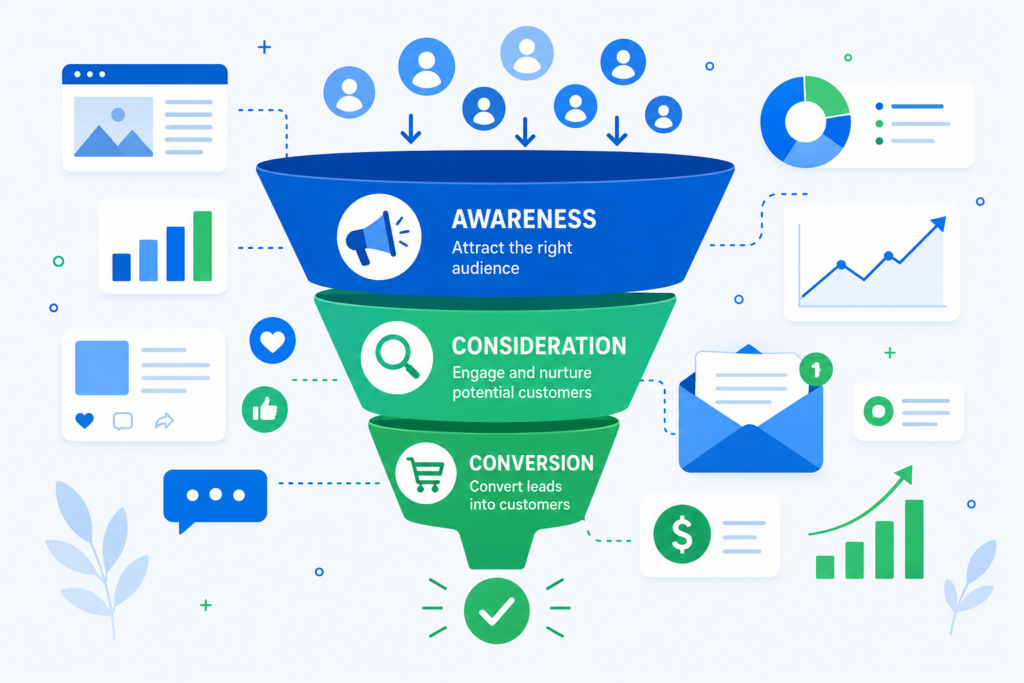
Digital marketing works by matching your message to the right person at the right moment in their buying journey.
Here is how I think about it practically. A person searches “best running shoes under $100” on Google. If I have an SEO-optimized article about that topic, my site appears. They read the article and click on my store. I retarget them with a Facebook ad if they do not buy on the first visit. Eventually, they buy. That entire chain is digital marketing in action.
The technical side involves several interconnected systems. Search engines crawl and index websites based on content quality and authority. Social platforms distribute content based on engagement signals. Email platforms deliver messages based on subscriber behavior.
Analytics ties it all together. Every click, impression, scroll, and purchase generates data. That data tells you what is working and what needs to change.
I check my analytics every morning. It is the most important habit I developed in this field.
Automation is increasingly important, too. Tools like HubSpot, ActiveCampaign, and Zapier let you build marketing workflows that run without manual intervention. A welcome email sequence, a retargeting ad campaign, or a content distribution schedule can all run on autopilot once built correctly.
Artificial intelligence is changing digital marketing faster than any other development I have seen. AI tools now generate content drafts, optimize ad bids in real time, predict customer churn, and personalize website experiences at scale. GEO (Generative Engine Optimization) is the newest frontier, where brands optimize content to be recommended by AI chatbots like Gemini, ChatGPT, and Perplexity.
COMMUNITY AND SOCIAL FEATURES OF DIGITAL MARKETING
Digital marketing has one of the most active professional communities I have encountered.
LinkedIn is the center of professional discussion. Marketers share case studies, campaign results, and strategy breakdowns daily. I learned as much from LinkedIn posts as from formal courses.
Twitter and X remain strong for real-time industry news and trend tracking. Following the right accounts keeps you ahead of algorithm changes and platform updates.
Reddit communities like r/digital_marketing and r/SEO are genuinely useful. Real practitioners share honest experiences without trying to sell you a course.
Conferences like MozCon, SMX, and Content Marketing World bring practitioners together in person. The networking value at these events is substantial.
Newsletters like the Ahrefs blog, the Semrush newsletter, and Neil Patel’s weekly email provide consistent value. I subscribe to all three.
The community aspect of digital marketing genuinely accelerates learning. The field moves quickly, and staying connected to practitioners helps you keep pace.
FULL FEATURES AND BENEFITS TABLE
Channel | Primary Benefit | Best For | Time to Results | Cost Range SEO | Free organic traffic | Long term growth | 3 to 12 months | Low to medium PPC Advertising | Immediate targeted traffic | Product launches promotions | Same day | Medium to high Social Media Marketing | Brand awareness and community | Engagement and reach | 1 to 3 months | Low to medium Email Marketing | High conversion rate | Repeat customers and nurturing | 1 to 4 weeks | Low Content Marketing | Authority and inbound leads | Long-term trust building | 6 to 18 months | Low to medium Affiliate Marketing | Scalable passive revenue | Product-based businesses | 3 to 6 months | Low Influencer Marketing | Fast brand exposure | Product awareness | 1 to 4 weeks | Medium to high
PROS AND CONS
Pros
The reach is global. A single blog post or video can attract visitors from every country.
The cost is flexible. You can start with $0 and grow organically. Or invest in ads for faster results.
The data is immediate. You know within hours whether a campaign is working.
The targeting is precise. You can show ads specifically to 28-year-old women in Lahore who are interested in fitness and recently visited a competitor’s website.
The career opportunities are real and growing. Digital marketing jobs are in demand globally, and the salaries are competitive.
The barrier to entry is low. A laptop, an internet connection, and a willingness to learn is enough to start.
Cons
The learning curve is steep at the beginning. Most people quit before they see results.
Algorithm changes can disrupt results overnight. I lost 30% of my SEO traffic in one Google core update.
Competition is intensifying. It was easier to rank on Google or go viral on social media five years ago than it is now.
Digital fatigue is real among consumers. People are increasingly tuned out to online advertising.
Paid advertising costs have risen significantly. PPC costs in competitive niches have increased 20 to 40% in the last three years.
Privacy regulations are tightening. GDPR and iOS privacy changes have limited targeting capabilities for advertisers.
SAFETY AND TRUST IN DIGITAL MARKETING
Digital marketing involves collecting and handling customer data. This creates responsibilities that every practitioner needs to understand.
GDPR in Europe and various data protection laws globally require businesses to get explicit consent before collecting email addresses or tracking behavior. Violating these rules carries significant fines.
I always use double opt-in email subscription processes. This confirms that subscribers genuinely want to hear from me and protects against spam complaints.
Transparency builds trust faster than any campaign. I disclose affiliate relationships on every post that contains them. I label all sponsored content clearly.
Brand safety in paid advertising is important, too. Review where your ads appear. I once found my ads running next to inappropriate content because my placement settings were too broad.
Beware of agencies or services promising guaranteed rankings or overnight results. Legitimate digital marketing takes time. Anyone claiming otherwise is either misleading you or using tactics that will eventually harm your website.
Verified certifications from Google, HubSpot, and Meta exist to signal trustworthy expertise. I recommend pursuing at least one recognized certification before marketing yourself as a digital marketing professional.
COMPARISON TABLE VS TRADITIONAL MARKETING
Factor | Traditional Marketing | Digital Marketing Audience Targeting | Broad and generic | Hyper-specific by age location interest and behavior Cost Structure | High fixed costs for print TV and radio | Flexible budgets starting from very low Result Measurement | Difficult and delayed | Immediate and precise Geographic Reach | Usually local or regional | Global with no additional cost Customer Interaction | One way communication | Two way engagement Campaign Adjustment | Slow and expensive to change | Real time adjustments at any point Conversion Tracking | Very difficult to attribute | Exact attribution available Scalability | Expensive to scale | Low cost to scale once systems are in place
TIPS AND TRICKS FOR BETTER RESULTS
Focus on intent-based content. People who search specific questions are much closer to buying than people who search broad terms. Target long-tail keywords.
Build your email list from day one. I ignored email marketing for my first year. That was a costly mistake. Start collecting emails immediately.
Repurpose content across channels. A blog post becomes a YouTube script, a Twitter thread, a LinkedIn carousel, and a podcast episode. One idea, seven pieces of content.
Use retargeting ads. Someone who visited your website and left is far more likely to convert than a cold audience. Retargeting campaigns are among the highest ROI investments I have made.
Test everything. Run A/B tests on ad headlines, email subject lines, and landing page layouts. Small improvements compound into large gains over time.
Invest in page speed. A one-second delay in load time reduces conversions by 7% according to multiple studies. Fast sites rank better and convert better.
Build backlinks actively. SEO without backlinks is like a business with no word of mouth. Reach out to relevant sites, create linkable assets, and guest post on reputable blogs.
Track your competitors. Tools like Semrush and Ahrefs let you see exactly which keywords your competitors rank for and which backlinks they have built.
WHO IS DIGITAL MARKETING BEST FOR?
Digital marketing is ideal for small business owners who want to compete with larger companies without matching their advertising budgets.
It suits students and career changers who want an in-demand skill. Digital marketing jobs are available globally and frequently offer remote work.
Entrepreneurs and startup founders benefit enormously from understanding digital marketing fundamentals, even if they eventually hire specialists.
Freelancers can build substantial income managing social media, running SEO campaigns, or handling email marketing for clients.
For foundational learning, the Google Digital Marketing and E-commerce Certificate on Coursera is one of the most recognized and comprehensive beginner programs available. You can find it at coursera.org.
For deep SEO education, the Moz Beginner’s Guide to SEO at moz.com remains one of the best free resources online. I referenced it regularly when I was learning.
FAQs
What exactly is digital marketing?
Digital marketing is the use of online channels, including search engines, social media, email, and websites, to promote products or services and connect with customers. It differs from traditional marketing by offering precise targeting, measurable results, and flexible budgets.
What are the 4 types of digital marketing?
The four core types are SEO (search engine optimization), PPC advertising (pay per click), social media marketing, and content marketing. Most practitioners expand this list to include email marketing, affiliate marketing, and influencer marketing as well.
What are the 7 types of digital marketing?
The seven major types are SEO, PPC advertising, social media marketing, content marketing, email marketing, affiliate marketing, and influencer marketing. Each serves different goals and works best in combination with the others.
How do I start in digital marketing?
Start by choosing one channel to learn first. Take a structured course like the Google Digital Marketing Certificate. Build a practice project. Learn to read analytics data. Document your results and build a portfolio before applying for jobs or clients.
What is a digital marketing salary?
Digital marketing salaries vary by role, location, and experience. Entry-level positions typically start between $35,000 and $50,000 per year in the United States. Mid-level specialists earn $55,000 to $85,000. Senior managers and directors earn $90,000 to $140,000 or more. Freelance digital marketers can earn significantly more depending on their niche and client base.
What is the scope of digital marketing?
The scope of digital marketing is extremely broad. It includes careers as SEO specialists, social media managers, content marketers, PPC analysts, email marketing specialists, digital marketing managers, and marketing directors. The field is growing globally as businesses shift budgets from traditional to digital channels.
What are the 5 disadvantages of digital marketing?
The five main disadvantages are: steep initial learning curve, vulnerability to algorithm changes, increasing competition making results harder to achieve, rising advertising costs in competitive niches, and growing consumer ad fatigue, making it harder to stand out.
Is AI replacing digital marketing?
AI is transforming digital marketing but not replacing it. AI tools automate repetitive tasks, optimize campaigns in real time, and generate content drafts. However, strategy, creative direction, brand voice, and relationship building still require human judgment. The marketers who learn to use AI tools effectively will have a significant advantage.
Where will digital marketing be in 5 years?
In five years, digital marketing will be heavily shaped by AI-generated search results, voice search, and generative engine optimization (GEO). Brands will need to optimize content for AI chatbots like Gemini and ChatGPT in addition to traditional search engines. First-party data strategies will become critical as third-party cookies disappear.
What are the best digital marketing courses in 2025?
The best digital marketing courses include the Google Digital Marketing and E-commerce Certificate on Coursera, HubSpot Academy free certifications, Meta Blueprint for social media advertising, Semrush Academy for SEO, and the Coursera Digital Marketing Specialization. I recommend starting with the Google certificate and expanding from there.

FINAL VERDICT
After four years of hands-on experience, I rate digital marketing 4.7 out of 5 as a career and business skill.
The learning curve is real. The competition is intensifying. Algorithms change without warning. These are genuine challenges I face regularly.
But the opportunity is unlike anything else I have encountered. The ability to reach millions of people with a well-constructed piece of content or a precisely targeted ad campaign is still remarkable. The salary potential is competitive. The remote work options are genuine. The skill transfers across industries and business models.
If I had to choose one thing to focus on first, it would be SEO combined with content marketing. The long-term return on that investment has outperformed every other channel I tested.
Digital marketing rewards consistency, curiosity, and a willingness to keep learning as the landscape shifts. If those describe you, this field will reward you well.
My final recommendation: start today. Take one free course. Build one small project. The gap between knowing and doing is where most people get stuck. Do not be like most people.


Play My World Online: My Honest Review After Exploring the Platform

Judith Giuliani Net Worth: Career, Wealth, and Financial Overview

Play World Online: The Complete Guide to Free Games, Apps & Platforms
-

 Law Firm Technology News9 months ago
Legal Movers and Shakers 2026 “Legal Tech News Today”
-

 Tech9 months ago
The Complete Guide to Archive ph: Alternatives, Fixes, and Why It’s Down (2026 Update)
-

 ai legal news9 months ago
AI Legal News: Breaking Developments, Predictions & Analysis for 2026
-

 Tech7 months ago
Why We Use AI to Create High-Performing Ads
-

 Tech9 months ago
GlobeInsightBlog: The Brutally Honest Truth About This Global Trends Platform (2026 Deep Dive)
-
Uncategorized9 years ago
Phillies’ Aaron Altherr makes mind-boggling barehanded play
-
Uncategorized9 years ago
Steph Curry finally got the contract he deserves from the Warriors
-

 Tech9 months ago
Windows Update Error 0x80070643: 11 Proven Ways to Fix It (2026)