Tech
Contract Lifecycle Management: Complete Guide (2026)
I have managed contracts for mid-market and enterprise teams for over six years. I have tested spreadsheets, shared drives, and a dozen dedicated platforms. The difference between doing it right and doing it wrong costs companies real money sometimes millions.
This guide covers everything I have learned about contract lifecycle management. I will walk you through the stages, the tools, the integrations, and the honest tradeoffs. No fluff. No generic advice. Just what actually works.
Table of Contents
- What Is Contract Lifecycle Management (CLM)?
- My Honest First Impressions of CLM Platforms
- Key Features of a Strong CLM System
- How To Get Started with Contract Lifecycle Management Step by Step
- Best Contract Lifecycle Management Software Available in 2025
- How Contract Lifecycle Management Works (Full Process Breakdown)
- Community and Ecosystem Around CLM Tools
- Full Features and Benefits Table
- Pros and Cons of CLM Software
- Safety and Trust in Contract Management
- CLM Software Comparison Table
- Tips and Tricks for Better Contract Management
- Who Is CLM Best For?
- External Resources
- FAQs
- Final Verdict
- What Is Contract Lifecycle Management (CLM)?
- Contract lifecycle management is the automated, end-to-end process of managing a contract from its initial creation through execution, performance monitoring, and eventual renewal or termination.
- Think of it as a structured system that tracks every stage of a contract’s life. It removes the guesswork. It replaces scattered email chains and desktop folders with a single, searchable, automated workflow.
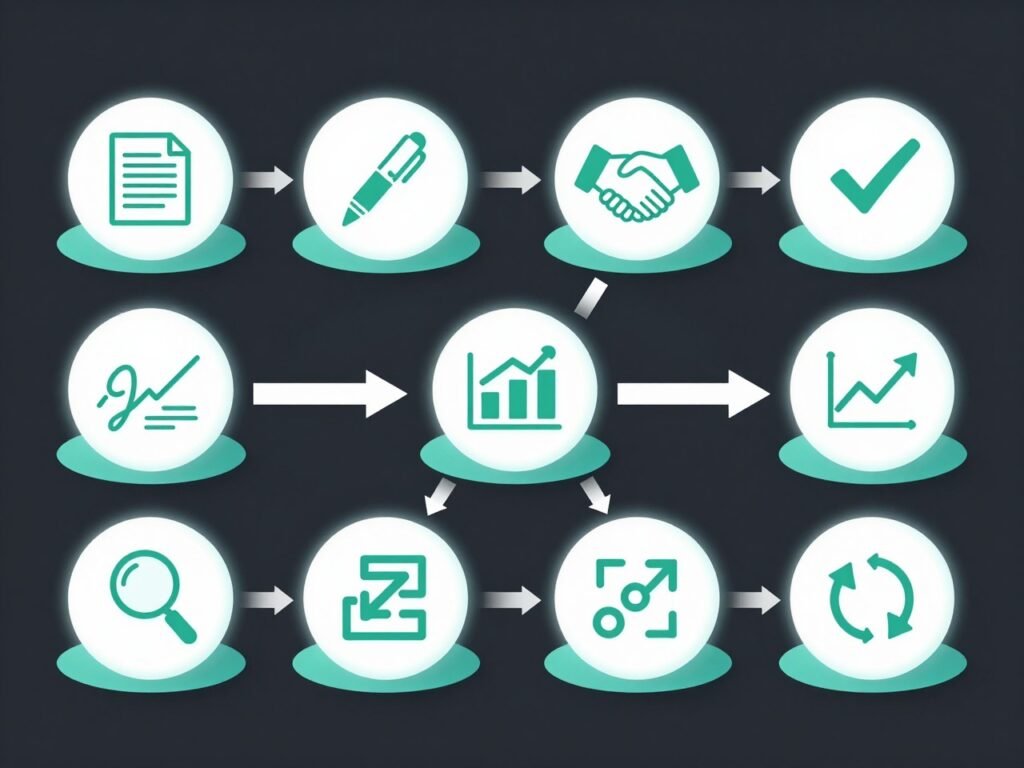
- A proper CLM system covers nine core stages:
- Request — A team submits a contract need with key details
- Authoring — Legal or sales drafts the contract using pre-approved templates
- Negotiation — Both sides review, redline, and counter-offer
- Approval — The contract routes automatically to stakeholders for sign-off
- Execution — All parties sign, usually via e-signature tools like DocuSign
- Performance and Compliance — Teams track deliverables and obligations post-signature
- Auditing and Reporting — Regular checks confirm all terms are being honored
- Amendments — Changes to scope or terms are tracked and appended
- Renewal or Termination — The contract is renewed, renegotiated, or closed out
- Without this process in place, companies suffer from what I call “contract blindspots.” Renewals get missed. Discount terms go unenforced. Legal language goes stale. Revenue leaks out through gaps nobody noticed.
- My Honest First Impressions of CLM Platforms
- When I first started evaluating contract lifecycle management platforms, I expected them all to feel basically the same. They did not.
- Some tools — like Icertis and SirionLabs — are genuinely built for enterprise complexity. They handle multi-entity, multi-jurisdiction contracts with advanced AI extraction. Impressive, but overkill if you are a 50-person company.
- Others, like SpotDraft and Juro, felt lighter and faster. Easier to deploy. Better for teams that need quick wins rather than six-month implementations.
- What surprised me most was how much the integrations mattered. A CLM tool that sits isolated from your CRM or ERP is just a fancy document folder. The moment it syncs with Salesforce, ServiceNow, or Workday, it becomes a revenue and compliance engine.
- I spent time on each platform’s free tier or trial where available. I ran mock contract workflows, tested approval routing, and pushed the search functionality hard. Here is what I found.
- Key Features of a Strong Contract Lifecycle Management System
- Centralized Contract Repository
- Every contract, every version, every redline — stored in one searchable place. No more hunting through email or shared drives. A central repository gives your legal, finance, and procurement teams a single source of truth.
- Pre-Approved Template and Clause Libraries
- Strong CLM platforms come with clause libraries built in. Your legal team pre-approves standard language. Everyone else pulls from that library instead of writing from scratch. This cuts drafting time significantly and reduces legal risk.
- Automated Approval Workflows
- Manual routing kills deal speed. The best contract lifecycle management tools automatically route documents to the right people in the right order. If someone is out of office, it escalates. Nothing sits in an inbox for three days.
- E-Signature Integration
- Execution should not require printing, scanning, or faxing. Native integrations with DocuSign CLM or Adobe Sign let contracts move from approved to signed in minutes. This alone speeds up your revenue cycle noticeably.
- AI-Assisted Contract Review and Extraction
- Newer platforms use AI to scan contracts and flag non-standard clauses, missing terms, or compliance risks. I tested this on legacy vendor agreements and it caught three high-risk clauses my team had missed manually. That is the kind of ROI that justifies a platform budget.
- Obligation and Milestone Tracking
- Post-signature is where most teams fall apart. CLM software tracks deliverables, payment schedules, SLAs, and renewal dates automatically. Alerts go out 30, 60, or 90 days before key dates. You never miss a deadline again.
- Reporting and Analytics
- Good platforms give you dashboards showing contract velocity, approval bottlenecks, and compliance scores. I used this data to identify that one specific legal reviewer was adding an average of 8 days to every contract. We fixed the process. Cycle time dropped immediately.
- How To Get Started with Contract Lifecycle Management Step by Step
- 1. Getting a CLM system off the ground does not have to take months. Here is the process I recommend based on what I have seen work.
- 2. Audit your current contract inventory – Count how many active contracts you hold. Categorize them by type: vendor, customer, employment, partnership.
- 3. Identify your biggest pain points — Are renewals getting missed? Are approvals taking too long? Are templates inconsistent? Your worst problem determines which CLM feature matters most.
- 4. Choose the right tier of tool — Enterprise teams with 500+ contracts need Icertis or Ironclad. Smaller teams can start with SpotDraft or Juro without overbuilding.
- 5. Map your approval workflow — Before you configure anything, document who approves what and in what order. Build that into the platform from day one.
- 6. Import your existing contract library — Upload and tag your existing contracts with metadata: counterparty name, value, expiry date, contract type.
- 7. Build your clause and template library — Work with legal to pre-approve your standard templates. Store them in the platform. Enforce their use from the first new contract.
- 8. Run a pilot with one contract type — Start with one contract category, like vendor NDAs or standard sales agreements. Work out the kinks before rolling out company-wide.
- 9. Set automated alerts for key dates — Configure renewal and expiry notifications at 90, 60, and 30 days out. This step alone pays for the tool.
- 10. Train your teams — CLM adoption fails when people are not trained. Do live walkthroughs. Create short reference guides for each team that touches contracts.
- 11. Measure and iterate — After 90 days, pull your reporting data. Look at cycle time, approval speed, and compliance rates. Adjust the workflow based on what the data shows.
- Best Contract Lifecycle Management Software Available in 2025
- Here are the platforms I have evaluated and what each one does best.
- Icertis — The enterprise standard. Deep AI capabilities, strong compliance features, and complex workflow support. Best for large organizations managing thousands of contracts across multiple entities.
- Ironclad — Excellent for legal operations teams. Clean UI, strong collaboration tools, and a solid audit trail. Popular with tech companies and fast-growing startups.
- DocuSign CLM — If your organization already uses DocuSign for signatures, this is the natural CLM extension. Strong e-signature integration, solid repository, good for mid-market teams.
- Salesforce Contract Lifecycle Management — Built inside Salesforce Revenue Cloud. If your sales team lives in Salesforce, this keeps contracts inside the same system where deals are managed. No context switching.
- ServiceNow Contract Lifecycle Management — Strong for IT and operations-heavy organizations already on the ServiceNow platform. Excellent for procurement and legal service delivery workflows.
- Workday Contract Management — Deep integration with Workday’s HR and finance modules. Best for companies that manage employment contracts or vendor agreements tied to finance operations.
- SpotDraft — AI-native contract platform. Fast to deploy, intuitive for non-legal users, and surprisingly powerful for its price point. Strong choice for startups and growth-stage companies.
- Juro — Browser-native CLM built for collaborative contract editing. Strong for teams that negotiate heavily and want real-time collaboration without email attachments.
- Conga — Formerly Apttus. Strong CPQ and document generation capabilities. Works well alongside Salesforce for quote-to-contract workflows.
- Agiloft — Highly configurable, no-code platform. Good for organizations with unique workflow requirements that out-of-the-box tools cannot handle.
- How Contract Lifecycle Management Works in Practice
- Let me walk you through a real-world CLM workflow using a sales contract as the example.
- A sales rep closes a deal and needs a customer agreement. Instead of emailing legal and waiting two days for a draft, they open the CLM platform and submit a contract request. The system pulls the pre-approved template for that deal type, auto-fills the known data from Salesforce (customer name, deal value, term length), and routes the draft to legal for a quick review.
- Legal checks for any non-standard terms requested by the customer. They make two edits. The system sends it automatically to the VP of Sales for approval, then to Finance for value thresholds above a set limit. Each approver gets a notification with a direct link.
- Once approved, the contract goes to the customer for signature via DocuSign. The customer signs in 20 minutes. The executed document lands in the repository, tagged and searchable.
- From that point, the system tracks all obligations — delivery milestones, payment dates, renewal windows. At 60 days before the contract end date, both the account manager and the customer success team get an automated renewal alert.
- That entire process, which once took 12 to 18 days, now takes under 3 days in well-configured CLM systems. I have seen this play out repeatedly across organizations.
Community and Ecosystem Around CLM Tools
The CLM space has a growing professional community worth tapping into.
The World Commerce and Contracting Association (WorldCC) is the primary professional body for contract management professionals. They publish benchmarking reports, host global conferences, and offer the Certified Commercial and Contract Manager certification.
Many CLM vendors also maintain active user communities. Icertis has an annual user conference. Ironclad runs a community forum for legal ops professionals. DocuSign CLM has a developer community for teams building custom integrations.
If you are building a career in this space, contract lifecycle management roles are expanding rapidly. CLM analyst, contract manager, legal operations specialist, and CLM implementation consultant are all in demand. Salary ranges vary widely — from $60,000 for junior roles to $140,000 or more for senior legal ops and CLM implementation leads at enterprise companies.
Also read this : Contract Automation: The Complete 2025 Guide
Full Features and Benefits Table
| Feature | What It Does | Business Benefit |
|---|---|---|
| Centralized Repository | Stores all contracts in one searchable database | No lost documents, full audit trail |
| Template Library | Pre-approved legal templates for every contract type | Faster drafting, lower legal risk |
| Automated Workflows | Routes contracts to right people automatically | Cuts approval time from days to hours |
| E-Signature Integration | Connects with DocuSign, Adobe Sign | Eliminates printing and manual signing |
| AI Contract Review | Flags risky clauses and non-standard terms | Reduces legal exposure |
| Obligation Tracking | Monitors milestones, payments, SLAs post-signature | No missed commitments |
| Renewal Alerts | Automated reminders before contract expiry | Zero missed renewals |
| Reporting and Analytics | Tracks cycle time, compliance, spend | Data-driven process improvement |
| CRM Integration | Syncs with Salesforce, HubSpot | Keeps sales and legal aligned |
| ERP Integration | Connects with Workday, SAP | Finance and procurement visibility |
Pros and Cons of Contract Lifecycle Management Software
Pros:
- Dramatically faster contract cycle times
- Reduced compliance risk through standardized templates
- Automated renewal alerts prevent revenue leakage
- Centralized repository eliminates document chaos
- AI review tools catch what humans miss
- Strong audit trails simplify regulatory compliance
- Integrations with CRM, ERP, and e-signature tools keep teams connected
Cons:
- Enterprise platforms carry significant implementation costs
- Setup and configuration require dedicated resources and time
- User adoption can be slow without strong internal change management
- Some platforms have a steep learning curve for non-legal users
- Free or low-cost contract management software options have limited features
- Over-reliance on automation without review can create new compliance gaps
Safety and Trust in Contract Management
Trust is the foundation of any contract system. Here is what to look for.
Data security matters more than most teams realize. Look for platforms with SOC 2 Type II certification, end-to-end encryption, and role-based access controls. Sensitive contract data should never be accessible to people who do not need it.
Version control is a trust mechanism. Every edit, every comment, every approval decision should be logged with a timestamp and user identity. This protects your organization in disputes and audits.
E-signature legality varies by jurisdiction. Ensure your platform uses legally binding e-signature standards that comply with ESIGN (US), eIDAS (EU), and other relevant regional laws.
For organizations in regulated industries — healthcare, financial services, government contracting — look for CLM platforms that offer compliance-specific modules and audit logs built to regulatory standards.
CLM Software Comparison Table
| Platform | Best For | Key Strength | Starting Price | Free Tier |
|---|---|---|---|---|
| Icertis | Enterprise | AI and compliance depth | Custom enterprise pricing | No |
| Ironclad | Legal ops teams | Collaboration and UI | Custom pricing | No |
| DocuSign CLM | Mid-market | E-signature integration | From $25/user/month | No |
| Salesforce CLM | Salesforce-native orgs | CRM integration | Add-on to Sales Cloud | No |
| ServiceNow CLM | IT and procurement | Platform integration | Custom pricing | No |
| Workday Contracts | HR and finance | ERP alignment | Part of Workday suite | No |
| SpotDraft | Startups and SMBs | AI, speed, ease of use | From $199/month | Limited trial |
| Juro | Collaborative teams | Real-time editing | From $165/month | Free plan |
| Agiloft | Complex workflows | No-code configurability | From $45/user/month | Free tier |
| Conga | Salesforce + CPQ | Quote-to-contract | Custom pricing | No |
Tips and Tricks for Better Contract Lifecycle Management
Get more out of your CLM system with these practical moves.
- Tag every contract with metadata from day one — counterparty, value, expiry, department. Search becomes 10 times faster.
- Build parallel approval tracks for large contracts that need simultaneous legal and finance review. Sequential routing adds unnecessary days.
- Use AI extraction to normalize legacy contracts pulled from old systems. Manual data entry at scale is how errors multiply.
- Set up a contract health dashboard your leadership team actually reviews quarterly. Visibility drives accountability.
- Create a contract request form that captures everything legal needs upfront. Incomplete requests are the number one cause of back-and-forth delays.
- Integrate your CLM with your CRM so that sales can see contract status without leaving their primary tool.
- Run a quarterly contract audit. Pull every contract expiring in the next 180 days and assess renewal value proactively.
- Use your clause library actively. When a non-standard clause gets requested repeatedly, consider promoting it into the standard library.
Who Is Contract Lifecycle Management Best For?
CLM is not just for large legal departments. Here is who gets the most value.
Enterprise legal and procurement teams managing hundreds or thousands of contracts across multiple business units and jurisdictions need a full-featured platform like Icertis or Ironclad.
Sales operations and revenue teams at companies with complex or high-volume customer agreements benefit enormously from CLM integrated into Salesforce. Contract velocity directly impacts revenue recognition.
Startups and growth-stage companies closing deals faster than their legal resources can keep up should look at SpotDraft or Juro. Fast deployment and AI assistance level the playing field.
Procurement and vendor management teams dealing with supplier contracts, SLAs, and compliance requirements will find that ServiceNow CLM or Agiloft handles their workflow complexity well.
HR and finance operations teams managing employment agreements, compensation structures, and vendor payments benefit from Workday’s integrated approach.
If you are still managing contracts in Google Drive or email threads, any dedicated CLM tool — even a free contract management software option with basic features — will deliver immediate ROI.
For deeper research and benchmarking, these two sources are worth your time.
- World Commerce and Contracting (WorldCC) — worldcc.com — The leading global professional body for contract and commercial management. They publish annual benchmarking reports and research on contracting best practices.
- Gartner Contract Lifecycle Management Reviews — gartner.com/reviews/market/contract-lifecycle-management — Independent user reviews and analyst coverage of CLM software across market segments. Useful for enterprise buyer research.
FAQs
What is contract lifecycle management? Contract lifecycle management is the systematic process of managing a contract from initial request through authoring, negotiation, approval, execution, performance monitoring, and eventual renewal or termination. CLM software automates this process to reduce risk, speed up deals, and maintain compliance.
What is the difference between CLM and CRM? A CRM (Customer Relationship Management) system manages relationships, leads, and sales pipelines. A CLM system manages the contracts that formalize those relationships. They are complementary tools. Many CLM platforms integrate directly with CRMs like Salesforce so both teams work from connected data.
What is the difference between CLM and ERP? An ERP (Enterprise Resource Planning) system manages core business operations — finance, HR, supply chain. A CLM focuses specifically on the contract document workflow. CLM and ERP often integrate so that contract financial terms feed directly into procurement and finance systems.
What are the five stages of contract management? The five core stages most commonly referenced are: drafting, negotiation, approval, execution, and post-signature management (which includes obligation tracking and renewal). A full CLM process typically expands this to nine stages including the initial request, auditing, amendments, and formal renewal or termination decisions.
What is contract lifecycle management in Salesforce? Salesforce CLM, offered through Salesforce Revenue Cloud, allows sales teams to manage contracts inside the Salesforce platform. It connects deal data, approval workflows, and contract documents without requiring sales reps to leave their CRM. It is particularly strong for organizations that run their full revenue operation inside Salesforce.
What is contract lifecycle management in ServiceNow? ServiceNow CLM is a module within the ServiceNow platform focused on legal service delivery and procurement workflows. It automates contract request, approval, and compliance tracking for IT and operations-heavy organizations. It integrates naturally with ServiceNow’s broader ITSM and procurement capabilities.
Is there free contract management software available? Yes. Tools like Juro offer a limited free plan. Some platforms offer free trials. However, truly free contract management software options tend to lack the automation, AI features, and integration capabilities that deliver full CLM value. For small teams managing fewer than 20 contracts, a free or low-cost tier may be sufficient.
What is the DocuSign CLM course? DocuSign offers official training and certification programs for its CLM platform through its learning portal. These courses cover platform navigation, workflow configuration, and administrator management. They are useful for CLM implementation specialists and legal ops professionals who manage DocuSign CLM deployments.
How does AI improve contract lifecycle management? AI improves CLM in three primary ways. First, AI-assisted drafting pulls relevant clauses and populates templates automatically. Second, AI review tools scan incoming contracts and flag non-standard or risky language before a human reviewer sees it. Third, AI extraction normalizes data from legacy contracts, making old agreements searchable and analyzable without manual data entry.
What is the average salary for contract lifecycle management roles? Contract lifecycle management salaries vary by role and seniority. Entry-level contract analysts earn $55,000 to $75,000 annually in the US. Experienced contract managers and legal ops specialists typically earn $85,000 to $115,000. Senior CLM implementation consultants and legal operations directors at enterprise organizations can command $130,000 to $160,000 or more.
Final Verdict
Contract lifecycle management is not optional for any organization managing more than a handful of contracts. The cost of doing it poorly — missed renewals, compliance failures, slow deal cycles, revenue leakage — consistently exceeds the cost of the right platform.
My overall rating: 4.7 out of 5 for adopting a dedicated CLM system over manual processes.
The right platform depends entirely on your company size, tech stack, and contract complexity. Enterprise teams should evaluate Icertis and Ironclad seriously. Salesforce-native organizations should start with Salesforce CLM. Startups and agile teams will get the fastest time-to-value from SpotDraft or Juro.
Whatever platform you choose, the principles stay the same. Centralize your contracts. Automate your approvals. Track your obligations. Never miss a renewal again.
That is contract lifecycle management done right.